











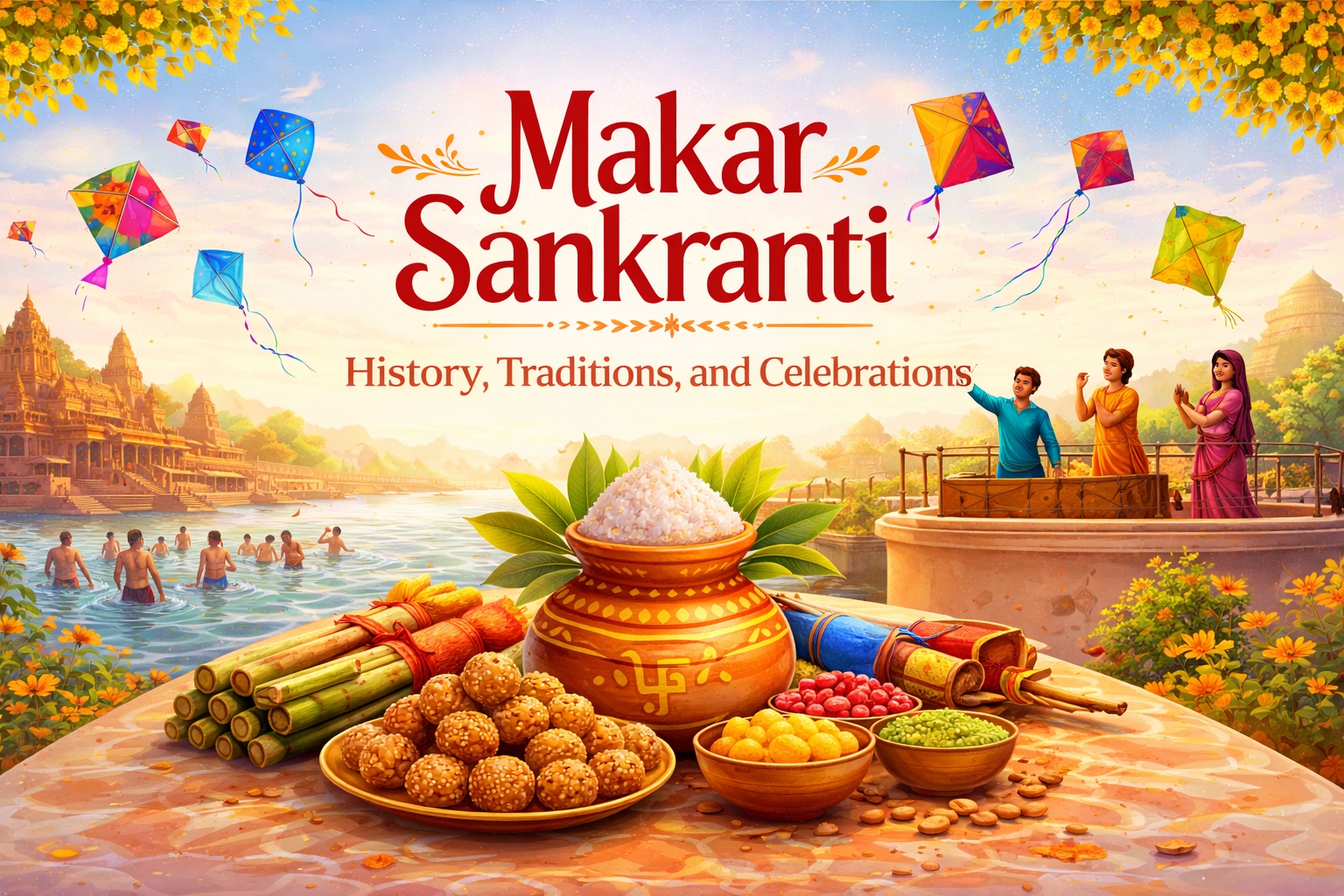



Makar Sankranti is one of the most widely celebrated and culturally rich festivals in India. Unlike many Hindu festivals that are based on the lunar calendar, Makar Sankranti follows the solar calendar, making it unique and astronomically significant. Celebrated with immense joy, gratitude, and devotion, the festival marks a new beginning, seasonal transition, and spiritual awakening. As Makar Sankranti 2026 approaches, people across India are preparing to welcome prosperity, positivity, and renewal in their lives.
This festival is known by different names in different regions, yet its essence remains the same—celebrating the harvest, the Sun God, and the shift of the sun into the zodiac sign Makara (Capricorn). From kite flying in Gujarat to Pongal in Tamil Nadu and Lohri in Punjab, Makar Sankranti unites the nation through diverse traditions.
Meaning of Makar Sankranti
The word Makar refers to the zodiac sign Capricorn, while Sankranti means transition. Thus, Makar Sankranti signifies the day when the Sun transitions into Capricorn, beginning its northward journey (Uttarayan). This astronomical event holds immense religious, spiritual, and scientific importance in Hindu culture.
Makar Sankranti is considered a highly auspicious day because it marks the end of the inauspicious period of Dakshinayan and the beginning of Uttarayan. According to ancient scriptures, the northward movement of the Sun is believed to bring positivity, growth, enlightenment, and good fortune.
During Makar Sankranti 2026, devotees will once again observe this celestial shift with rituals, holy baths, prayers, and festive gatherings.
When is Makar Sankranti celebrated?
Makar Sankranti is celebrated every year on or around 14 January, though in rare cases it may fall on 15 January, depending on the Sun’s movement.
Makar Sankranti Date 2026
- Makar Sankranti 2026 will be celebrated on Wednesday, 14 January 2026
Since the festival is governed by the solar cycle, its date remains relatively fixed, unlike other Hindu festivals that change annually based on the lunar calendar.
The date of Makar Sankranti 2026 marks:
- The Sun’s entry into Capricorn
- The beginning of Uttarayan
- Longer days and shorter nights
- A spiritually auspicious period
This is why the festival holds immense religious, cultural, and scientific importance across India.
Historical Background of Makar Sankranti
The history of Makar Sankranti dates back thousands of years and is deeply rooted in Indian mythology and ancient scriptures.
Mythological Significance
According to Hindu mythology, on the day of Makar Sankranti, Lord Surya (Sun God) visits the house of his son Shani (Saturn), symbolizing reconciliation, harmony, and family bonding. This story emphasizes the importance of relationships, forgiveness, and unity.
Another popular legend associates the festival with Bhishma Pitamah from the Mahabharata. It is believed that Bhishma waited for the arrival of Uttarayan to give up his mortal body, as dying during this period was considered auspicious and believed to lead to liberation (moksha).
Historical and Agricultural Roots
Historically, Makar Sankranti has been closely linked with agriculture. India being an agrarian society, this festival marks the end of the winter solstice and the beginning of the harvest season. Farmers express gratitude to nature and the Sun for a successful harvest and pray for future abundance.
As Makar Sankranti 2026 arrives, it continues to honor this age-old connection between humans, nature, and cosmic rhythms.
Religious and Spiritual Significance
Makar Sankranti is considered one of the most sacred festivals in Hinduism. Devotees believe that performing religious activities on this day brings immense spiritual merit.
Holy Bath and Charity
Taking a holy dip in sacred rivers like the Ganga, Yamuna, Godavari, and Kaveri is considered extremely auspicious on Makar Sankranti. It is believed that such a bath washes away sins and purifies the soul.
Charity also plays a major role. Donating food, clothes, grains, sesame seeds (til), and jaggery is believed to bring blessings and prosperity. During Makar Sankranti 2026, millions of devotees are expected to participate in acts of selfless giving.
Worship of the Sun God
Since the festival revolves around the Sun’s movement, worshipping Lord Surya is central. Special prayers, offerings, and Surya Namaskar are performed to seek good health, success, and longevity.
Scientific Importance of Makar Sankranti
Beyond religious beliefs, Makar Sankranti holds scientific significance as well. The Sun’s transition into Capricorn marks a shift that gradually increases daylight hours in the Northern Hemisphere.
This seasonal change positively impacts human health, agriculture, and climate. Traditional foods consumed during the festival—such as sesame seeds, jaggery, and peanuts—are rich in nutrients and help maintain body warmth during winter.
As we celebrate Makar Sankranti 2026, the festival serves as a reminder of ancient India’s deep understanding of astronomy, seasonal cycles, and human well-being.
Why Makar Sankranti Is Celebrated Across India?
One of the most beautiful aspects of Makar Sankranti is its pan-India presence. While the name may change, the theme of harvest, gratitude, and renewal remains consistent.
The festival represents:
- New beginnings and positivity
- Gratitude towards farmers and nature
- Harmony between humans and cosmic forces
- Cultural diversity and unity
In Makar Sankranti 2026, this unity in diversity will once again be visible across the country through regional celebrations.
How India Celebrates Makar Sankranti: Regional Traditions
Makar Sankranti in Gujarat – Uttarayan Festival
In Gujarat, Makar Sankranti is famously celebrated as Uttarayan, a grand kite-flying festival. The sky becomes a vibrant canvas filled with colorful kites of all shapes and sizes.
Families gather on rooftops, enjoy traditional snacks, and participate in friendly kite battles. The festival atmosphere symbolizes freedom, joy, and the soaring of human aspirations.
Makar Sankranti in Maharashtra
In Maharashtra, people exchange tilgul (sesame and jaggery sweets) and greet each other with the phrase, “Tilgul ghya ani god god bola”, meaning “Accept this sweet and speak sweet words.”
This tradition promotes harmony, sweetness in relationships, and forgiveness. During Makar Sankranti 2026, tilgul will once again symbolize unity and goodwill.
Pongal in Tamil Nadu
In Tamil Nadu, Makar Sankranti is celebrated as Pongal, a four-day harvest festival dedicated to the Sun God. The highlight is the preparation of Pongal, a sweet dish made from freshly harvested rice, milk, and jaggery.
Homes are decorated with colorful kolams, cattle are honored, and families express gratitude for agricultural abundance.
Lohri in Punjab
In Punjab, the festival coincides with Lohri, celebrated with bonfires, folk songs, and traditional dances like Bhangra and Gidda. Lohri marks the harvesting of sugarcane and winter crops.
The warmth of the bonfire reflects the joy, prosperity, and community spirit associated with Makar Sankranti 2026.
Magh Bihu in Assam
Assam celebrates Makar Sankranti as Magh Bihu, also known as Bhogali Bihu. It is marked by feasting, traditional games, and community gatherings.
People build temporary huts called meji and light bonfires, symbolizing the end of the harvesting season and the beginning of leisure and joy.
Makara Sankranti in Karnataka and Andhra Pradesh
In Karnataka and Andhra Pradesh, the festival is celebrated with colorful rangoli, temple visits, and the preparation of sesame-based sweets.
Farmers decorate cattle, offer prayers, and thank nature for a successful harvest.
Traditional Foods Associated with Makar Sankranti
Food plays a vital role in the celebration of Makar Sankranti. Each region has its own specialties, but sesame seeds and jaggery are common across India.
Popular dishes include:
- Til ladoo
- Chikki (peanut brittle)
- Pongal
- Khichdi
- Puran Poli
- Rice and sugarcane delicacies
These foods are not only delicious but also nutritious, helping the body adapt to seasonal changes during Makar Sankranti 2026.
Social and Cultural Importance
Makar Sankranti strengthens social bonds and encourages community participation. Families come together, old disputes are forgotten, and relationships are renewed.
The festival promotes:
- Unity and harmony
- Respect for farmers and laborers
- Gratitude toward nature
- Cultural preservation
In modern times, Makar Sankranti 2026 will continue to bridge tradition and contemporary celebrations.
Makar Sankranti in Modern Times
While the essence of the festival remains unchanged, modern celebrations have evolved. Kite festivals, cultural programs, digital greetings, and eco-friendly practices are becoming more popular.
People are increasingly focusing on sustainable celebrations by avoiding plastic kites, reducing waste, and supporting local artisans.
Why Makar Sankranti 2026 Is Special
Every year, Makar Sankranti brings hope and positivity, but Makar Sankranti 2026 holds special significance as people continue to seek balance, well-being, and renewal in a fast-changing world.
The festival reminds us to:
- Embrace change positively
- Stay connected to our roots
- Value gratitude and generosity
- Look forward to growth and enlightenment
Conclusion
Makar Sankranti is more than just a festival—it is a celebration of life, nature, and cosmic harmony. With its deep-rooted history, spiritual meaning, and vibrant regional traditions, it beautifully reflects India’s cultural richness.
As Makar Sankranti 2026 approaches, it invites everyone to welcome the Sun’s northward journey with hope, positivity, and gratitude. Whether through prayers, kite flying, festive foods, or acts of charity, the festival continues to inspire unity, renewal, and joy across generations.
May Makar Sankranti 2026 bring prosperity, happiness, and new beginnings to all.
Frequently Asked Questions (FAQs)
When is Makar Sankranti 2026 celebrated?
Makar Sankranti 2026 will be celebrated on Wednesday, 14 January 2026. The festival follows the solar calendar, so its date remains almost fixed every year.
Why is Makar Sankranti considered an important Hindu festival?
Makar Sankranti marks the Sun’s transition into the zodiac sign Capricorn and the beginning of Uttarayan, which is considered an auspicious period for spiritual growth, prosperity, and positive energy.
What is the spiritual significance of Makar Sankranti 2026?
The spiritual significance of Makar Sankranti 2026 lies in the belief that holy baths, charity, and prayers performed on this day help cleanse sins, bring good karma, and lead to spiritual upliftment.
Why are sesame seeds and jaggery used during Makar Sankranti?
Sesame seeds (til) and jaggery (gur) are considered auspicious and are consumed for their health benefits. They help keep the body warm in winter and symbolize sweetness, unity, and harmony in relationships.
How is Makar Sankranti celebrated across different Indian states?
Makar Sankranti is celebrated under various names across India, such as Uttarayan in Gujarat, Pongal in Tamil Nadu, Lohri in Punjab, and Magh Bihu in Assam, each reflecting local culture and harvest traditions.
Is Makar Sankranti a harvest festival?
Yes, Makar Sankranti is primarily a harvest festival. It celebrates the end of the winter crop season and honors farmers for their hard work while expressing gratitude to nature and the Sun God.
What rituals are commonly performed on Makar Sankranti?
Common rituals include taking holy dips in sacred rivers, worshipping the Sun God, performing Surya Namaskar, donating food and clothes, and sharing festive sweets with family and friends during Makar Sankranti 2026.
What message does Makar Sankranti 2026 convey?
Makar Sankranti 2026 conveys a message of renewal, positivity, gratitude, and new beginnings. It encourages people to embrace change, spread kindness, and move toward a brighter and more prosperous future.
Related Blog: Happy Makar Sankranti Wishes, Quotes, and Messages




What do you think?
It is nice to know your opinion. Leave a comment.