











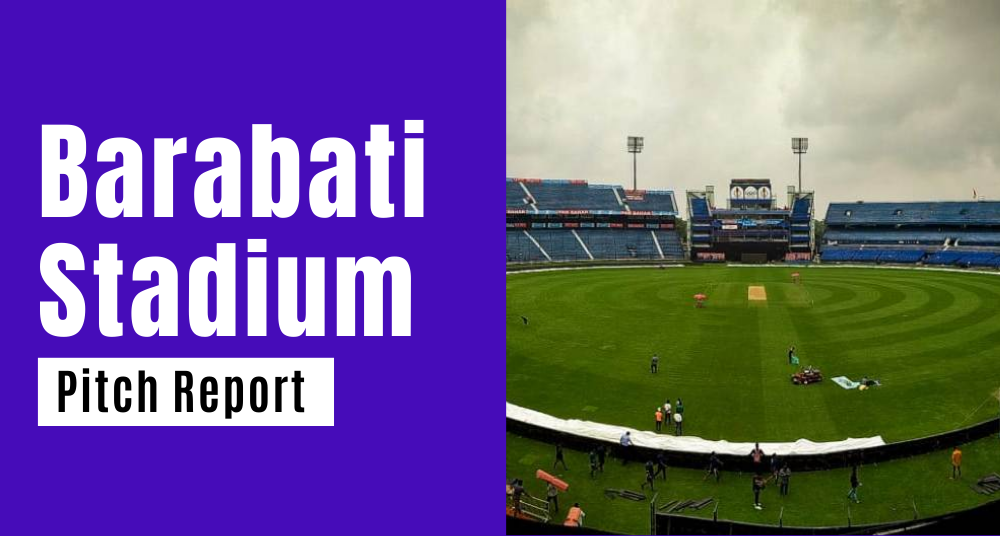



Barabati Stadium in Cuttack, Odisha, is one of India’s oldest and most iconic cricket grounds. Known for its passionate crowds, competitive matches, and unpredictable playing surface, the venue continues to be a favorite for domestic and international fixtures. Whether it’s ODIs, T20s, IPL matches, or domestic Ranji Trophy games, the stadium has delivered several memorable moments over the decades.
This Barabati Stadium Pitch Report provides a comprehensive breakdown for cricket fans, analysts, fantasy players, and bettors. From pitch behavior and weather factors to batting, bowling, and match strategies, this guide offers everything you need to know about how the surface behaves across formats. If you’re searching for a complete Cuttack Stadium Pitch Report, this analysis will give you deeper insights into how both bowlers and batsmen can expect the pitch to perform throughout a match.
Overview of Barabati Stadium, Cuttack
Barabati Stadium, located in the historic city of Cuttack, has hosted cricket for more than 70 years. It has a seating capacity of around 45,000 spectators and is known for its electric atmosphere during big matches. The stadium serves as a home ground for the Odisha cricket team and has hosted a variety of international matches, particularly ODIs.
While it may not host Test matches frequently, it remains a crucial venue for limited-overs cricket in India, making the Barabati Stadium Cuttack Pitch Report highly relevant for analysts and players preparing for short-format matches.
The stadium has also hosted IPL games, where teams have experienced the dynamic nature of the pitch — sometimes favoring seamers early on, shifting in favor of spinners in the middle overs, and offering variable bounce.
| Category | Details |
| End Names | Mahanadi River End, Pavilion End |
| Flood Lights | Yes |
| Home Teams | India, Orissa |
| Pitch | Grass |
Nature of the Pitch: What Makes Barabati Stadium Unique?
The pitch at Barabati Stadium is often described as unpredictable and challenging. Unlike high-scoring venues such as Wankhede or Chinnaswamy, this surface usually doesn’t guarantee big totals — unless the pitch is freshly prepared and batting-friendly.
Key Characteristics of Barabati Stadium Pitch
- Initially helps swing bowlers
- Offers grip and turn for spinners in the later stages
- Slows down as the match progresses
- Variable bounce is common
- Not traditionally a batting paradise
For players and captains, understanding this detailed Barabati Stadium Pitch Report helps make crucial decisions, especially at the toss.
Barabati Stadium Pitch Report: Behavior in Different Phases
First 10 Overs
In the initial overs, pacers get notable assistance from the pitch. Early morning matches, dew-free evenings, and overcast conditions amplify swing and seam movement. The ball grips the surface and moves off the seam, making it difficult for openers.
Middle Overs
As the pitch settles, spinners become more effective. The surface dries up and starts offering sharp turn. In ODIs and T20s, slow bowlers often dominate between overs 8 to 16 (in T20s) and 15 to 35 (in ODIs).
Death Overs
The pitch becomes slower, making shot-making difficult. Batters have to rely on timing rather than power. Bowlers who use cutters, slower balls, and variations excel at Barabati Stadium during the final overs.
This multi-phase behavior highlights why this Cuttack Stadium Pitch Report is essential for understanding how both teams should approach their innings.
Pitch Behavior in Different Formats
Pitch in ODIs
ODI matches at Barabati Stadium generally produce scores between 240–280. High-scoring ODIs are uncommon unless the pitch is relaid or heavily watered before the game.
- Early swing for fast bowlers
- Stable middle overs for batting
- Late spin and slower pace
Teams batting first must aim for 260+ to stay competitive.
Pitch in T20 Matches
T20 matches at Barabati Stadium often see scores between 140–170. The slower nature of the surface makes slogging difficult, especially in the second innings.
- Hard-hitting batsmen struggle against spin
- Pacers with variations create trouble
- Strike rotation becomes more important
This makes the Barabati Stadium Cuttack Pitch Report crucial for fantasy sports players who want to select bowlers who can exploit the conditions.
Pitch for Domestic Matches
In Ranji Trophy and local tournaments, the pitch tends to favor spinners significantly as the match progresses. This is why Odisha’s home matches often see spinners bowl bulk overs.
Barabati Stadium Pitch Report: Batting Analysis
Pros for Batsmen
- The pitch settles after the initial movement
- Runs become easier once the ball gets older
- Good timing rewards shot makers
Challenges for Batsmen
- Early swing and seam movement
- Grip for spinners in middle overs
- Slow outfield at times
- Variable bounce
Batting Tips
- Play cautiously in the first 4–5 overs
- Rotate strike to avoid getting stuck against spinners
- Use sweep and reverse sweep to counter turn
- Target the shorter boundaries to accelerate scoring
Understanding these factors in the Barabati Stadium Pitch Report helps batsmen prepare mentally and technically.
Barabati Stadium Pitch Report: Bowling Analysis
For Fast Bowlers
Fast bowlers benefit significantly in the initial overs due to natural seam movement and swing. Hard lengths yield success. Variations such as slower balls and cutters become effective later.
Ideal Strategies:
- Bowl good-length deliveries to maximize lateral movement
- Use cross-seam deliveries on slowing surfaces
- Employ yorkers and slower balls in death overs
For Spinners
Spinners often dominate in Cuttack. The pitch assists off-break and leg-spin bowlers equally due to its dry and abrasive nature.
Effective Tactics:
- Bowl slower through the air
- Invite batters to drive
- Exploit inconsistent bounce
- Use wide angles to force mis-hits
This is why the Cuttack Stadium Pitch Report often highlights spin-friendly conditions.
Weather Conditions and Their Impact
Weather plays a huge role in pitch conditions at Barabati Stadium. Cuttack experiences tropical weather with humidity, which impacts swing and surface behavior.
Humidity
High humidity enhances swing for fast bowlers. Evening matches often favor seamers more during the first few overs.
Dew Factor
Night matches may see dew, but not as consistently as in northern India. Dew flattens the pitch and makes gripping the ball difficult for spinners.
Heat and Dryness
Afternoon games cause the pitch to dry quickly, increasing cracks and creating ideal conditions for spin bowling.
Weather is a key part of any Barabati Stadium Pitch Report, as it can significantly alter match outcomes.
Barabati Stadium: Ideal Strategy for Teams
Best Strategy When Batting First
- Play cautiously early
- Build partnerships
- Target a score above par (260+ in ODIs, 160+ in T20s)
- Use powerplay efficiently
Best Strategy When Chasing
- Preserve wickets early
- Attack only loose deliveries
- Rotate strike consistently
- Expect difficulty against spin
Teams winning the toss often prefer to bat first, especially in T20s, given the slowing nature of the surface.
Pitch Comparison: Barabati Stadium vs Other Indian Grounds
| Stadium | Nature of Pitch | Average T20 Score | Spin Impact |
| Barabati Stadium | Slow, turning, unpredictable | 140–170 | High |
| Wankhede | Flat, batting | 170–200 | Low |
| Chepauk | Turning | 150–170 | Very High |
| Eden Gardens | Balanced | 160–180 | Medium |
This comparison adds further clarity to the Barabati Stadium Cuttack Pitch Report and what teams can expect.
Barabati Stadium Boundary Dimensions
Barabati Stadium features moderate boundary sizes, giving bowlers an advantage:
- Straight boundaries: ~70 meters
- Square boundaries: ~60–65 meters
These dimensions favor bowlers when combined with the slow surface.
Records at Barabati Stadium
Highest Team Totals
ODIs rarely breach 300 here due to pitch nature. Several teams have struggled to accelerate during middle overs.
Most Wickets
Spinners and medium pacers dominate wicket charts at Barabati.
Notable Matches
- India vs England ODI where seamers took early wickets
- IPL games where spin dictated outcomes
These historical patterns support the trends outlined in this Barabati Stadium Pitch Report.
Toss Prediction Insight
Given the pitch behavior:
- Bat first in T20s
- Bat first in ODIs
- Spinners become lethal later
Teams choosing to field first may struggle as the pitch gets slower.
Conclusion
The Barabati Stadium Pitch Report highlights how unique, challenging, and strategically demanding the Cuttack surface is for both batsmen and bowlers. Its slow nature, assistance to spinners, early seam movement, and humidity-driven conditions make it a ground where skill and discipline matter more than power hitting.
Whether you’re looking for a general Cuttack Stadium Pitch Report or a detailed breakdown of how the Barabati Stadium Cuttack Pitch Report influences match outcomes, this guide provides all the insights needed for players, analysts, fantasy users, and cricket fans to better understand the dynamics of the ground.
Frequently Asked Questions (FAQs)
What is the Barabati Stadium Pitch Report for today’s match?
The Barabati Stadium Pitch Report usually indicates a slow surface with early swing for pacers and strong assistance for spin later in the game. The exact conditions depend on weather, pitch preparation, and format.
Is Barabati Stadium a batting or bowling pitch?
Historically, Barabati Stadium favors bowlers more than batsmen. Seamers get movement early on, while spinners dominate the middle overs, making scoring difficult.
How does the pitch behave in T20 matches at Cuttack?
According to most Cuttack Stadium Pitch Reports, T20 matches here generally see low-to-moderate scoring, with typical totals around 140–170. Slower balls, cutters, and spin variations work very well.
What does the Barabati Stadium Cuttack Pitch Report say about ODIs?
In ODIs, teams usually score between 240–280. The Barabati Stadium Cuttack Pitch Report suggests that batting gets easier after the initial overs but becomes tougher again as the pitch slows down.
Does dew affect the pitch at Barabati Stadium?
Yes, dew can occasionally affect night matches, making the pitch slightly better for batting and harder for spinners to grip the ball. However, dew is not as severe as in northern Indian venues.
How does the pitch assist fast bowlers?
Fast bowlers benefit from swing and seam early in the innings. Overcast conditions enhance this movement, making Barabati one of the more seam-friendly grounds in India during the first 5–7 overs.
Why do spinners perform well at Barabati Stadium?
The surface becomes dry and abrasive as the match progresses, offering sharp turn and grip. This is why the Cuttack Stadium Pitch Report consistently highlights favorable conditions for spinners.
What is the average T20 score at Barabati Stadium?
The average T20 score is around 140–170, depending on pitch preparation. It’s not a typical high-scoring venue due to its slow, gripping nature.
Is chasing easier or tougher at Barabati Stadium?
Chasing can be difficult because the pitch slows down later, making stroke play harder. Teams winning the toss often prefer to bat first, especially in T20s.
What type of players should team pick based on the Barabati Stadium Pitch Report?
Teams should pick swing bowlers, finger spinners, and batsmen who handle spin well. Power hitters who rely only on pace-friendly wickets may struggle on this surface.
Related Blog: Eden Gardens Kolkata Pitch Report




What do you think?
It is nice to know your opinion. Leave a comment.