











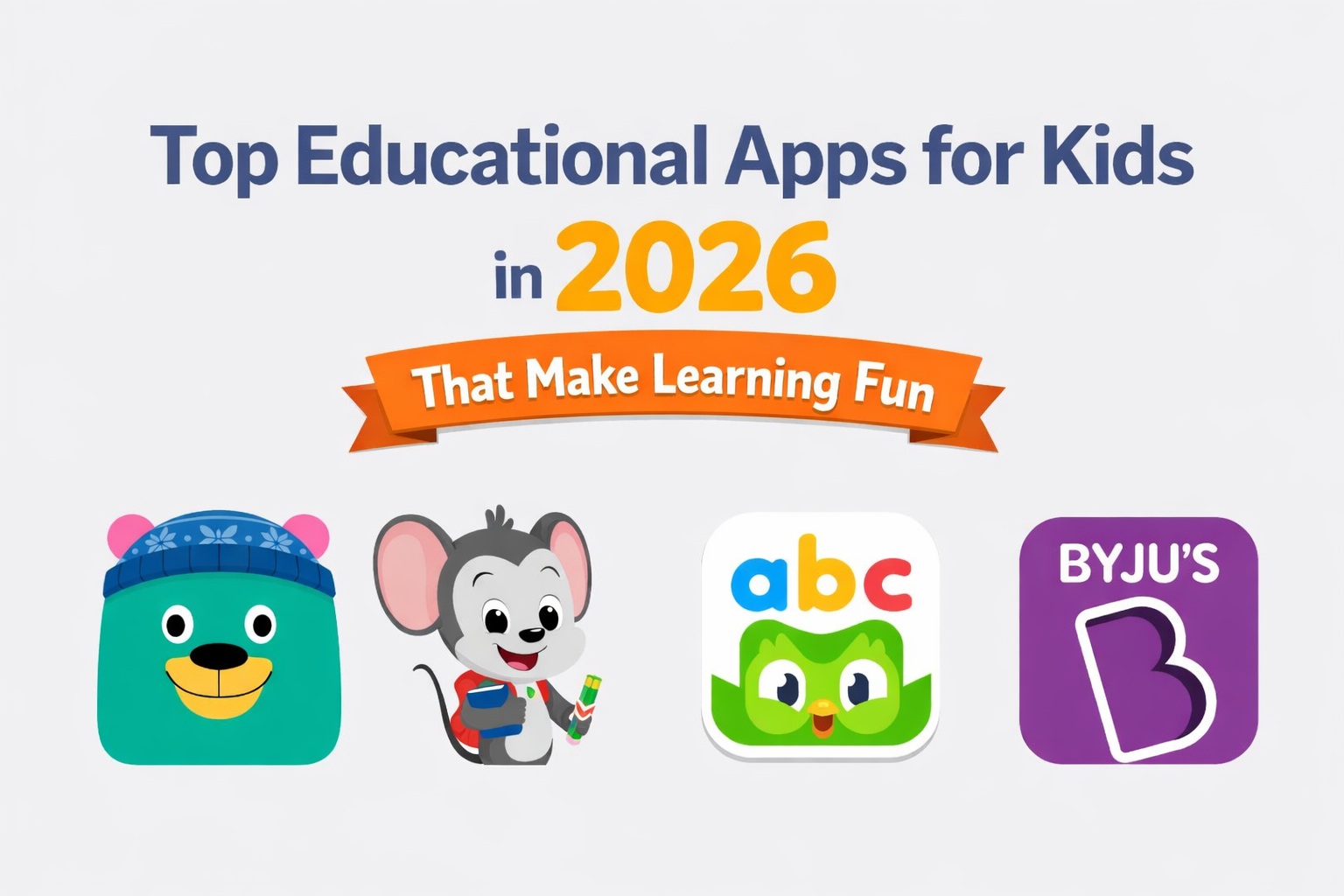



As digital learning continues to grow, educational apps for kids have become an essential tool for early education and skill development. In 2026, the best educational apps for kids focus on combining fun with structured learning through interactive activities, puzzles, and games.
Designed for different age groups, these apps help children improve literacy, numeracy, creativity, and logical thinking while maintaining a healthy balance between learning and entertainment.
Key Features of the Best Educational Apps for Kids
The best educational apps for kids are designed to do more than just entertain. They create a safe, engaging, and effective learning environment that supports a child’s overall development. Below are the key features that make these apps truly valuable for young learners.
Interactive & Gamified Learning
Top educational apps use games, quizzes, and rewards to keep children engaged. Gamification encourages kids to learn through play, helping them understand concepts naturally without feeling pressured.
Age-Appropriate & Structured Content
The best educational apps for kids offer content tailored to specific age groups. Lessons are structured in a way that matches a child’s learning ability, ensuring steady progress without overwhelming them.
Progress Tracking for Parents
Many educational apps include detailed progress reports that allow parents to monitor learning outcomes. This feature helps identify strengths, areas for improvement, and overall development.
Safe, Ad-Free & Child-Friendly Environment
Child safety is a top priority. Quality educational apps provide ad-free experiences, secure logins, and controlled access, creating a distraction-free and safe learning space.
Multi-Language & Accessibility Support
To reach diverse learners, the best educational apps for kids support multiple languages, voice guidance, and easy navigation, making learning accessible for children from different backgrounds.
Offline Learning Access
Offline functionality allows kids to continue learning anytime, anywhere. This is particularly helpful when traveling or in places where internet access is limited.
Creativity & Skill Development Tools
Beyond academics, many apps encourage creativity through drawing, storytelling, music, and problem-solving activities, supporting holistic development.
Top Educational Apps for Kids in 2026
With the right learning apps, children can explore new ideas while having fun. In 2026, many apps focus on building basic skills through interactive games and creative tasks. These apps make learning feel natural and stress-free. Below is a list of apps that continue to support children’s learning journey.
- Khan Academy Kids
- ABCmouse
- Duolingo Kids
- BYJU’S Learning App
- SplashLearn
- Prodigy Math Game
- Epic! – Kids’ Books & Reading
- Toca Boca World
- CodeSpark Academy
- Lingokids
#1. Khan Academy Kids: A Free App for Early Learning
Khan Academy Kids is a free learning app for children aged 2 to 8, designed to make early education fun and interactive. It offers games, storybooks, and activities that teach reading, math, writing, and creativity in a playful way. With friendly characters and engaging visuals, kids stay motivated while learning important skills at their own pace.
The app adapts to each child’s progress, providing challenges that match their level. It also encourages social and emotional learning, making it a trusted choice for parents and educators alike.
#2. ABCmouse: Comprehensive Early Learning Program
ABCmouse is an all‑in‑one educational app for children, especially ages 2–8, offering a broad range of lessons from foundational skills to advanced topics. Kids learn through animated activities, puzzles, songs, and storybooks that make learning feel like play rather than work.
With easy navigation and progress tracking, the app adjusts activities to match a child’s pace. Parents appreciate how ABCmouse blends learning with fun, helping children stay engaged while building confidence in reading, math, and creativity.
#3. Duolingo Kids: Fun Language Learning for Children
Duolingo Kids is a colorful language learning app designed especially for younger learners. It teaches basic vocabulary, simple phrases, and pronunciation through interactive lessons and playful challenges. With friendly characters and bite‑sized activities, children stay motivated while learning a new language step by step.
The app uses rewards, sounds, and fun visuals to make language practice feel like a game rather than a chore. Parents appreciate that Duolingo Kids makes learning languages accessible and engaging, helping build confidence and curiosity in children’s early language journeys.
#4. BYJU’S Learning App for Kids
BYJU’S Learning App is a popular educational app designed to help young children learn through fun and engaging activities. It offers a wide library of lessons, video games, and quizzes that make basic concepts in reading, math, and language easy to understand. The app uses well‑known characters and interactive challenges to keep kids interested and excited about learning.
With content tailored to each child’s pace, the app adapts lessons based on progress and skill level. Parents can also track how their child is advancing and see which areas need more practice. This mix of enjoyment and structured learning makes BYJU’S a helpful tool for early learners.
#5. SplashLearn
SplashLearn is a game‑based learning app designed for young learners, especially those in preschool through elementary grades (ages around 2–11). It offers a wide range of interactive math and reading games, stories, puzzles, and activities that make learning feel like play.
Kids build confidence in key skills such as counting, basic operations, phonics, and word recognition through engaging challenges that adapt to their pace.
What parents and teachers love most is how the app blends curriculum‑aligned lessons with fun visuals and rewards. SplashLearn’s adaptive system adjusts difficulty based on progress, helping kids stay motivated without becoming overwhelmed.
It also provides progress insights for parents, making it easy to track improvement over time. With its colorful design and child‑friendly environment, SplashLearn turns daily learning into an enjoyable experience that supports both school and at‑home education.
#6. Prodigy Math Game: Exciting Math Practice
Prodigy Math Game helps kids enjoy daily math practice by turning it into a game. Targeted for grades 1–8, it uses fun characters, quests, and challenges to teach arithmetic, fractions, geometry, and other math topics, making learning interactive and enjoyable.
The app tracks each child’s performance and adjusts challenges to their skill level. Parents can easily monitor growth and identify areas needing extra attention. By blending education with play, Prodigy Math Game encourages children to improve math skills while having fun.a
#7. Kids’ Books & Reading: A Digital Library for Young Readers
Epic! – Kids’ Books & Reading lets children aged 2 to 12 explore a huge collection of books, audiobooks, and videos in a safe, interactive digital environment. It offers a huge digital library with thousands of books, audiobooks, and videos that cover storybooks, educational topics, comics, and more. Kids can explore their favorite genres while building reading skills at their own pace.
The app makes reading fun with colorful illustrations, easy navigation, and personalized recommendations. Parents can track what their children are reading and set time goals, helping young learners develop a strong reading habit both at home and on the go.
#8. Toca Boca World – Imagination‑Led Learning
Recognized as one of the best educational apps for kids, Toca Boca World emphasizes creative play where kids make their own choices. The app doesn’t focus on quizzes or drills; instead, it lets children dive into playful scenarios, create characters, and build stories from scratch.
This freedom encourages imagination, curiosity, and problem‑solving. For parents seeking apps that support creative thinking along with entertainment, Toca Boca World offers an engaging, child‑friendly space where learning feels like play.
#9. CodeSpark Academy – Fun Intro to Coding
CodeSpark Academy is counted among the best educational apps for kids who want a playful introduction to coding. It uses games, puzzles, and friendly characters to make learning logic and sequencing feel fun instead of difficult. Children solve interactive challenges that teach problem‑solving, pattern recognition, and computational thinking — all without needing advanced reading skills.
With its bright visuals and kid‑friendly activities, CodeSpark makes early coding exploration feel like play. Parents appreciate how it builds thinking skills and confidence while keeping learning enjoyable.
#10. Lingokids – Playful English Learning for Children
Lingokids is among the best educational apps for kids who are beginning to learn English. It offers a wide range of interactive games, songs, and activities that help children build vocabulary, pronunciation, and basic language skills in a fun way. Lessons are simple to follow and adapt to each child’s pace, keeping young learners motivated and engaged.
The app combines colorful visuals with playful challenges, turning language practice into an enjoyable daily habit. Parents appreciate how Lingokids supports early literacy and communication skills while making screen time both fun and productive.
Final Words
As children grow up in a digital world, choosing the right learning tools becomes more important than ever. The best educational apps for kids offer engaging lessons and playful experiences that nurture creativity, critical thinking, and academic skills.
When parents guide their children’s use of these apps, screen time becomes an opportunity for positive development. With smart choices and a thoughtful approach, educational apps can be valuable companions in a child’s early learning journey.
Frequently Asked Questions (FAQs)
1. What are educational apps for kids?
Educational apps for kids are digital tools designed to help children learn new skills or reinforce knowledge through interactive lessons, games, and activities. They often cover subjects like reading, math, languages, coding, and creativity while keeping learning fun and engaging.
2. Are these apps safe for children?
Yes, most top educational apps for kids are designed to be safe, ad-free, and child-friendly. Parents can usually control settings, monitor progress, and ensure the app is appropriate for their child’s age.
3. Do I need to pay for these apps?
Some apps are completely free, like Khan Academy Kids, while others offer free basic content with optional subscriptions for full access, such as ABCmouse and Epic!. It depends on the app’s features and content library.
4. How do I choose the right educational app for my child?
Look for apps that match your child’s age, learning level, and interests. Consider apps with interactive features, progress tracking, and positive reinforcement. Always check reviews, safety features, and how the app balances learning and fun.
Related Blog: Education Apps for Skill Development




What do you think?
It is nice to know your opinion. Leave a comment.