











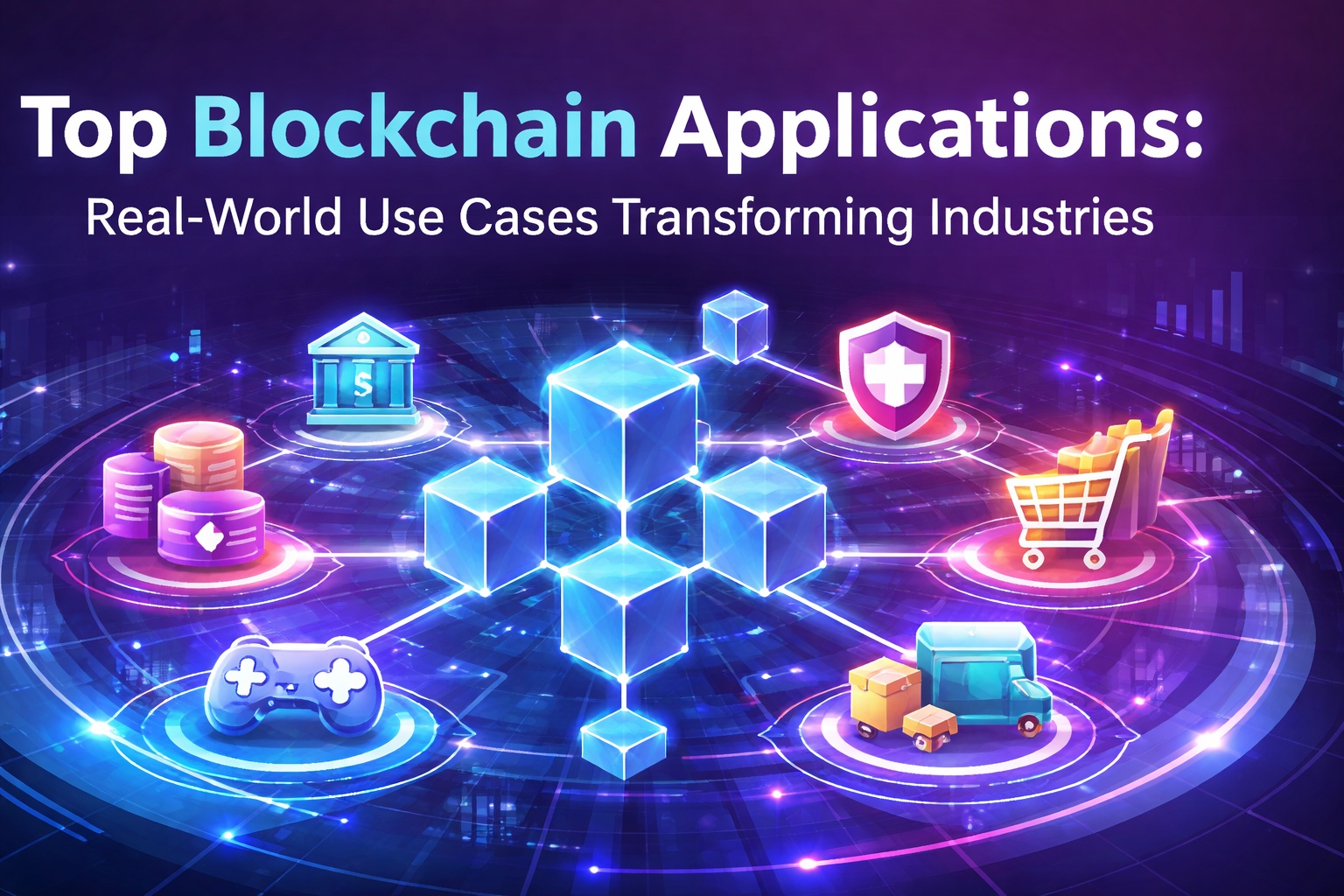



Blockchain technology is redefining how industries operate by offering unmatched security, transparency, and efficiency. From streamlining financial transactions to enhancing supply chain management, blockchain applications are proving essential for businesses looking to innovate and stay ahead. This article highlights the key applications of blockchain that are shaping the future of modern enterprises.
What Is Blockchain? Understanding the Technology Behind the Revolution
Blockchain is a decentralized digital ledger that records transactions across multiple computers in a secure, transparent, and tamper-proof way. Unlike traditional centralized systems, blockchain allows data to be stored in “blocks” that are linked chronologically, making it nearly impossible to alter past records without consensus from the network.
This technology not only powers cryptocurrencies like Bitcoin but also enables a wide range of blockchain applications across industries, from finance and healthcare to supply chain management and government services. Understanding how blockchain works is essential to appreciating the transformative potential of its real-world applications of blockchain.
Top Blockchain Applications Transforming Industries Today
Cross‑Border Payments
Cross-border payments are one of the most impactful blockchain applications today. By eliminating intermediaries and using a decentralized ledger, blockchain allows money to move across borders faster, cheaper, and more securely. Businesses and individuals can now transfer funds in real time, with full transparency and reduced transaction costs, making global payments simpler and more efficient than ever.
4 real-world examples of cross-border payments using blockchain
1. Ripple (XRP)
RippleNet allows banks and payment providers to settle international transactions instantly using the XRP ledger. Major banks like Santander and American Express use Ripple for faster, cheaper cross-border transfers.
2. Stellar (XLM)
Stellar enables micro-transactions and remittances across borders, especially in developing countries. Platforms like SatoshiPay use Stellar to send money quickly between countries with low transaction fees.
3. IBM Blockchain World Wire
IBM World Wire uses blockchain to process cross-border payments for financial institutions in real-time. It allows instant settlement between banks across multiple currencies while reducing compliance and operational costs.
4. TransferWise (now Wise) experimenting with blockchain
While Wise is primarily a fintech for borderless transfers, it is testing blockchain technology to further reduce settlement time and operational fees for international money transfers.
Decentralized Finance (DeFi)
DeFi is revolutionizing traditional finance by replacing banks and centralized institutions with decentralized platforms built on blockchain. Businesses and individuals can now borrow, lend, trade, and earn interest directly on blockchain networks, reducing costs and improving efficiency. This shift towards applications of blockchain in finance is creating a more accessible, transparent, and secure financial ecosystem.
1. Uniswap
A decentralized exchange (DEX) that allows users to swap cryptocurrencies directly on the Ethereum blockchain without intermediaries. Uniswap uses liquidity pools and automated market makers for instant trades.
2. Aave
A decentralized lending and borrowing platform where users can lend crypto assets to earn interest or borrow against collateral. Aave’s smart contracts handle all transactions automatically and securely.
3. Compound
A blockchain-based platform that lets users earn interest on their crypto holdings or borrow funds through decentralized protocols. Compound’s algorithm adjusts interest rates based on supply and demand.
4. MakerDAO
A decentralized lending platform on Ethereum that allows users to create the stablecoin DAI by locking collateral in smart contracts. MakerDAO ensures stability and trust without relying on banks.
Smart Contracts
Smart contracts are blockchain-based programs that automatically execute agreements when specific conditions are met. By removing intermediaries and ensuring transparency, smart contracts enable faster, more secure, and cost-effective transactions across industries, from finance and real estate to supply chain and insurance.
1. Ethereum
Ethereum is the most popular blockchain for smart contracts, enabling developers to build decentralized applications (dApps) that automate agreements, payments, and workflows across industries like finance, gaming, and real estate.
2. Binance Smart Chain (BSC)
BSC supports fast and low-cost smart contracts, widely used for DeFi projects, token creation, and decentralized exchanges. Its compatibility with Ethereum’s ecosystem makes it a preferred choice for many developers.
3. Cardano
Cardano allows for secure and scalable smart contracts, focusing on reliability and formal verification. It’s used in sectors like supply chain, education, and digital identity.
4. Solana
Solana provides high-speed smart contract execution with low transaction costs, making it ideal for NFT marketplaces, DeFi platforms, and real-time applications that require fast and scalable solutions.
Cryptocurrency Transactions
Cryptocurrency transactions allow users to send and receive digital currencies securely over blockchain networks without intermediaries. These transactions are fast, transparent, and tamper-proof, making them a key example of blockchain applications that are transforming global payments and financial systems.
1. Bitcoin (BTC)
The first and most widely recognized cryptocurrency, Bitcoin enables peer-to-peer transactions globally without intermediaries. It’s used for payments, remittances, and as a digital store of value.
2. Ethereum (ETH)
Ethereum allows users to transfer cryptocurrency and execute smart contracts on its blockchain. Its ecosystem supports decentralized applications (dApps) and token-based transactions.
3. Ripple (XRP)
Ripple is designed for fast cross-border cryptocurrency transactions between banks and financial institutions. It reduces settlement times from days to seconds and lowers fees.
4. Litecoin (LTC)
Litecoin is a peer-to-peer cryptocurrency optimized for fast and low-cost transactions, often used for online payments and microtransactions where speed and affordability are key.
Patient Data Management
Managing patient data has always been challenging due to fragmented systems, security risks, and compliance requirements. Blockchain allows healthcare providers to store, share, and verify patient records securely across institutions. By enabling real-time access and protecting sensitive information, it demonstrates one of the most practical applications of blockchain in modern healthcare.
1. MedRec
MedRec, developed by MIT, uses blockchain to manage electronic medical records securely. It allows patients and providers to access complete health histories while maintaining privacy and data integrity.
2. Patientory (PTOY)
Patientory is a blockchain platform that enables secure storage and sharing of patient health information, giving patients full control over who can access their medical records.
3. BurstIQ
BurstIQ offers blockchain-based healthcare data management, allowing organizations to safely store, share, and analyze medical records while ensuring HIPAA compliance.
4. SimplyVital Health
SimplyVital Health uses blockchain to create interoperable health data networks, facilitating secure and transparent patient data sharing among hospitals, clinics, and research organizations.
Drug Traceability
Blockchain is revolutionizing drug traceability by providing transparent, tamper-proof records of a medicine’s journey from manufacturer to patient. This ensures authenticity, prevents counterfeit drugs, and strengthens trust in the pharmaceutical supply chain, making it a key blockchain application in healthcare.
1. MediLedger
MediLedger is a blockchain-based network for pharmaceutical companies that enables end-to-end drug traceability, helping prevent counterfeit medications and ensuring compliance with regulations like the U.S. Drug Supply Chain Security Act (DSCSA).
2. IBM Food Trust (Pharma Division)
IBM’s blockchain solution, originally for food traceability, is also applied in pharmaceuticals to track drug production and distribution, improving transparency and safety across the supply chain.
3. TE-FOOD
TE-FOOD uses blockchain to track food and pharmaceutical products, providing tamper-proof records of every transaction, from manufacturer to pharmacy, ensuring authenticity and regulatory compliance.
4. Chronicled
Chronicled offers blockchain-powered supply chain solutions for the pharmaceutical industry, enabling secure tracking of drugs, verification of origin, and prevention of counterfeit medicines.
Educational Credential Verification
Blockchain is transforming how academic achievements are recorded and verified. By creating immutable digital records of degrees, certificates, and transcripts, it allows students, employers, and universities to trust the authenticity of educational credentials instantly, paving the way for a more transparent and efficient global education system.
1. Blockcerts
Blockcerts is an open-source platform that allows institutions to issue, share, and verify academic credentials on the blockchain, ensuring tamper-proof and easily verifiable records.
2. MIT Media Lab
The MIT Media Lab uses blockchain to issue digital diplomas to students, allowing instant verification of degrees by employers and other institutions worldwide.
3. Sony Global Education
Sony’s blockchain platform enables secure verification of academic certificates and educational records, helping schools, universities, and employers reduce fraud and administrative effort.
4. Learning Machine
Learning Machine partners with universities to create blockchain-based credentialing systems, allowing students to control their verified diplomas and share them digitally with employers or other institutions.
Internet of Things (IoT) Integration
The combination of blockchain and IoT is transforming how connected devices interact. By providing a decentralized and secure platform for data exchange, blockchain enables IoT devices to operate autonomously, reduce fraud, and improve efficiency. This synergy is shaping the future of smart homes, industrial automation, and energy management, making it a standout application of blockchain.
1. IBM Watson IoT + Blockchain
IBM integrates blockchain with its Watson IoT platform to securely track and manage data from connected devices, enabling transparent supply chains, smart manufacturing, and predictive maintenance.
2. IOTA
IOTA is a blockchain-like protocol designed specifically for IoT, enabling secure, feeless transactions between devices in smart homes, connected vehicles, and industrial IoT networks.
3. Waltonchain
Waltonchain combines blockchain and RFID technology to track goods and devices across supply chains, providing secure IoT data management and reducing counterfeit products.
4. Ambrosus
Ambrosus integrates IoT sensors with blockchain to monitor the quality, origin, and movement of products, particularly in supply chains for food, pharmaceuticals, and high-value goods.
Voting & Governance Systems
Blockchain is revolutionizing voting and governance by enabling secure, transparent, and tamper-proof elections. Each vote is recorded on an immutable ledger, ensuring accuracy, privacy, and trust, making this a key application of blockchain in modern governance.
1. Voatz
Voatz is a blockchain-based mobile voting platform used in the United States for secure and verifiable elections, including overseas military voting and municipal elections.
2. Horizon State
Horizon State provides a decentralized voting and governance platform that allows organizations and communities to conduct transparent elections and polls with immutable results.
3. Follow My Vote
Follow My Vote is a blockchain voting system that ensures end-to-end verifiable and tamper-proof elections, giving voters confidence in the integrity of the election process.
4. Democracy Earth
Democracy Earth is a decentralized governance platform that enables secure, transparent, and fair voting for communities and organizations using blockchain technology.
Cybersecurity & Secure Data Sharing
Blockchain strengthens cybersecurity and enables secure, tamper-proof data sharing by storing information on a decentralized ledger. This ensures transparency, prevents unauthorized access, and protects sensitive data, making it a crucial blockchain application across industries.
1. Guardtime
Guardtime uses blockchain to provide secure data integrity solutions for enterprises and governments, ensuring that critical information cannot be tampered with or altered.
2. IBM Blockchain for Data Security
IBM leverages blockchain to enable secure data sharing and encrypted transactions, helping organizations protect sensitive information across supply chains, healthcare, and finance.
3. CyberX
CyberX uses blockchain technology to provide real-time cybersecurity monitoring and secure data exchange, enhancing protection against cyber threats for industrial networks and IoT systems.
4. Enigma
Enigma is a blockchain platform that enables privacy-preserving computation and secure data sharing, allowing organizations to share encrypted data while maintaining confidentiality and compliance.
Gaming & NFT Platforms
Traditional gaming often restricts ownership of digital assets to a single platform. Blockchain changes this by giving players full control and verifiable ownership of in-game items through NFTs. Developers can create play-to-earn ecosystems, enhancing engagement and generating new revenue streams, demonstrating a powerful application of blockchain in entertainment.
1. Axie Infinity
Axie Infinity is a blockchain-based game where players can collect, breed, and battle NFT creatures called Axies, earning cryptocurrency rewards through gameplay and the play-to-earn model.
2. Decentraland
Decentraland is a virtual world where users own, buy, and sell virtual land and assets as NFTs, enabling a decentralized gaming and metaverse ecosystem.
3. The Sandbox
The Sandbox allows players and creators to design, trade, and monetize in-game assets and experiences using blockchain and NFTs, fostering a player-driven gaming economy.
4. Enjin
Enjin provides a blockchain platform for creating, managing, and trading in-game NFT assets, allowing game developers to integrate true digital ownership and cross-platform compatibility.
Retail Inventory Authentication
Blockchain is transforming retail inventory management by creating a decentralized and transparent record of every product’s journey. Consumers and retailers can verify authenticity, prevent fraud, and ensure quality, making blockchain a game-changing technology for inventory authentication and supply chain integrity.
1. VeChain
VeChain uses blockchain to track products throughout the supply chain, ensuring authenticity and reducing counterfeit goods in industries such as luxury, fashion, and agriculture.
2. IBM Food Trust
IBM Food Trust, while focused on food, provides a blockchain platform that allows retailers to verify product origin, quality, and journey, making it applicable to inventory authentication in retail.
3. Everledger
Everledger uses blockchain to authenticate high-value items like diamonds, wine, and luxury goods, providing immutable records of provenance and ownership.
4. TE-FOOD
TE-FOOD integrates IoT and blockchain to track products from farm to store, allowing retailers and consumers to verify authenticity and improve supply chain transparency.
Agriculture Supply Chain Solutions
Blockchain is reshaping agriculture supply chains by making them secure, transparent, and efficient. Farmers, distributors, and consumers can track crops in real time, verify quality, and ensure accountability at every stage, making blockchain a transformative tool for sustainable and trustworthy food systems.
1. IBM Food Trust
IBM Food Trust uses blockchain to track agricultural products from farm to consumer, ensuring transparency, quality, and food safety across the supply chain.
2. TE-FOOD
TE-FOOD integrates blockchain and IoT to monitor the journey of food products, from harvesting to retail, providing traceability, authenticity, and improved supply chain efficiency.
3. AgriDigital
AgriDigital offers a blockchain platform for managing payments, contracts, and deliveries in agriculture, enabling secure and transparent transactions between farmers, buyers, and distributors.
4. Provenance
Provenance uses blockchain to verify the origin and journey of agricultural products, giving consumers confidence in product authenticity and sustainability while enhancing supply chain transparency.
Final Words
The potential of blockchain goes far beyond cryptocurrencies. Its ability to secure data, automate processes, and provide decentralized trust is reshaping industries worldwide. As organizations continue to explore and implement blockchain applications, we are moving toward a future where transactions are seamless, data is secure, and trust is embedded in every system. The blockchain revolution has only just begun—and its impact will be profound.




What do you think?
It is nice to know your opinion. Leave a comment.