











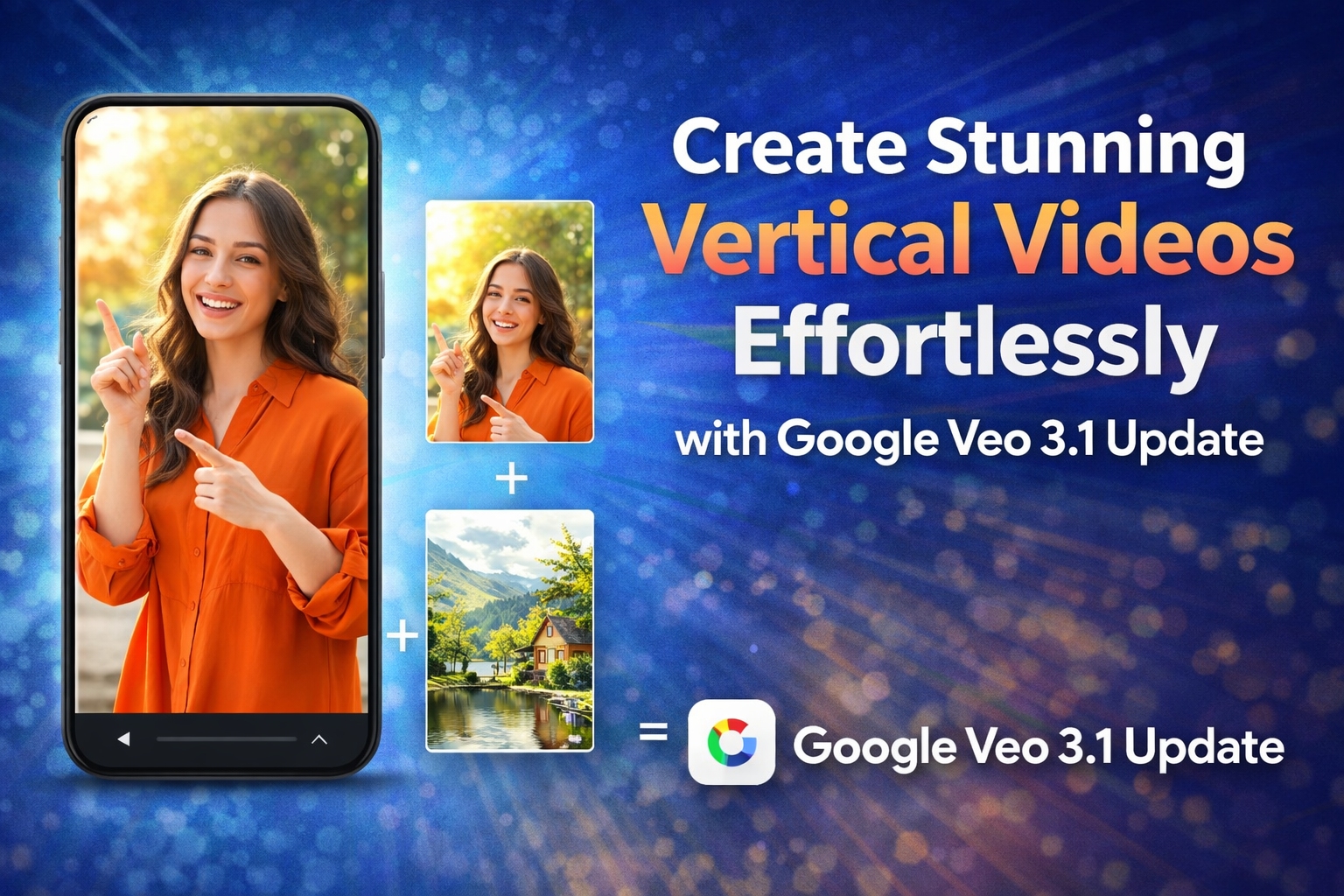



In the rapidly evolving world of AI-powered content creation, Google has just taken a significant step forward with its latest update to Veo 3.1, its artificial intelligence video-generation model. This update specifically enhances the model’s ability to produce vertical videos — a format that’s become ubiquitous on platforms such as YouTube Shorts, Instagram Reels, and TikTok — directly using reference images without the need for traditional editing or cropping.
But what exactly does this mean for creators, developers, and businesses looking to leverage AI for mobile-first video content? Let’s dive deep into how this update works, its implications, and why it matters for the future of social media and digital storytelling.
What Is Google’s Veo 3.1?
Veo 3.1 is the latest iteration of Google’s AI-powered video generation technology. Originally launched in late 2025, Veo 3.1 expanded on previous models by improving audio handling, prompt adherence, and video editing controls.
The key innovation with this release lies in a feature called “Ingredients to Video,” which allows users to provide reference images — such as character portraits, object photos, or background scenes — that the AI uses as a basis for generating dynamic, expressive video content. The model then interprets these inputs, along with text prompts, to produce rich video outputs.
It’s a leap forward from previous generations, where you could mostly generate generic video based on textual descriptions. Veo 3.1 ties the narrative closer to your visual style and specific elements, offering unprecedented control in AI-assisted video creation.
Why Vertical Videos Matter?
Vertical video — typically in a 9:16 aspect ratio — has become the standard format for short-form content. As mobile usage continues to dominate consumption habits, platforms like YouTube Shorts, Instagram Reels, and TikTok prioritize full-screen vertical content that captures attention quickly and organically.
Traditionally, creators would have to shoot or crop videos to fit this format. However, Veo 3.1 now generates vertical videos natively, which means AI-generated output is already suited for mobile screens without additional editing or compromise to quality.
This shift is not cosmetic — it fundamentally aligns AI creation tools with how modern audiences consume video content. Users can now go directly from idea and visual inspiration to upload-ready vertical video in a streamlined workflow, removing barriers that often complicate digital content creation.
How the Reference Image Workflow Works?
At the heart of the Veo 3.1 update is the reference image integration. This enables creators to supply one or more images that the AI treats as source material for visual elements in the video.
Here’s how it enhances the process:
Visual Consistency Across Scenes
Veo 3.1 ensures that characters, objects, and backgrounds from your reference images maintain consistent appearance across all frames in the video. The AI interprets visual details like clothing, facial features, and object design and applies them uniformly, even if the scene changes.
This means your characters stay recognizable from clip to clip, eliminating an issue that has long plagued generative video tools where elements can unpredictably shift or deteriorate over time.
Short Prompts, Big Results
Unlike traditional models that often require detailed, lengthy instructions, Veo 3.1 can generate expressive videos from short prompts combined with visual reference material. Google’s goal is to make video generation feel more intuitive and creative without forcing users into rigid prompt engineering.
Blend Elements Creatively
The tool allows creators to blend characters, objects, backgrounds, and textures into a cohesive video narrative. You’re no longer limited to static backdrops or stock visuals; you can mash together disparate visual elements and let the AI unify them into a fluid video sequence.
This opens up new creative possibilities for storytelling, marketing content, and even experimental art projects that rely on mixed visual vocabularies.
Native Vertical Output — What That Means
One of the biggest highlights of the update is native vertical video support. Before this, users often had to work in landscape formats and manually crop or adjust videos to fit portrait screens. With Veo 3.1, that step is no longer necessary.
Creators can now generate 9:16 vertical videos right from the generation stage, meaning the output is full-screen and perfectly tailored for mobile audiences — essential for platforms like YouTube Shorts, Instagram Reels, and TikTok.
This also makes AI video more efficient and user-friendly:
- No cropping needed — The full visual output is already in portrait-ready format.
- Better storytelling — Vertical videos feel more immersive on phones.
- Streamlined workflow — Saves time and tools for creators who often pivot between formats.
Upscaling to Higher Resolution (1080p and 4K)
Beyond vertical formatting, Veo 3.1 also introduces or enhances upscaling capabilities — allowing creators to output videos in 1080p and even 4K resolutions.
Higher resolution means:
- Sharper visuals — for professional presentations or larger screens.
- Post-editing flexibility — easier to integrate into other workflows.
- More polished results — appealing to clients, brands, and audience expectations.
Note that high-resolution outputs may vary based on the platform or workflow you select. For example, web-based editor “Flow” and cloud APIs like Vertex AI support upscaling, while consumer apps may still produce standard resolution until updates roll out more broadly.
Where You Can Use Veo 3.1?
To make these features widely accessible, Google has integrated the Veo 3.1 updates into several tools and platforms:
Gemini App
The main AI application where everyday users can generate videos directly from their mobile devices using reference images and text prompts.
YouTube Shorts & YouTube Create App
Creators can now access the updated Veo features from within YouTube’s own video creation ecosystem — a big step toward native short-form support.
Flow
A more professional AI video editor that supports advanced features such as upscaling and extended editing tools.
Gemini API & Vertex AI
Developers and enterprise users can integrate Veo 3.1 through APIs, making AI video generation part of larger applications and workflows.
Google Vids
A platform aimed at video generation and editing that also supports the updated model capabilities.
This tiered access strategy ensures that both casual users and professional creators can benefit from the same core technology, tailored to their skill and needs.
Creative and Practical Use Cases
The Veo 3.1 updates unlock a broad range of applications beyond typical social media clips:
Marketing and Branding
Brands can now quickly generate vertical ad content using product photos as reference images — eliminating tedious shoot workflows. Tight visual consistency and higher-resolution output make it easier to produce on-brand promotional clips at scale.
Education and Training
Instructors could create short, engaging vertical video lessons using reference diagrams or stills — lowering production barriers.
Entertainment and Storytelling
Authors and filmmakers can draft short narrative sequences without needing full production teams, using reference artwork to guide character performances and settings.
User-Generated Content
Casual creators and influencers can bring memes, illustrations, or design concepts to life as short videos with minimal effort.
Challenges and Limitations
No technology is without constraints. Although Veo 3.1 represents a major advancement in AI video generation:
- AI artifacts can still appear in fast motion or complex scenes.
- Licensing and commercial use details may require careful consideration for brand usage.
- Platform support for highest resolutions may vary depending on the tool or app used.
Still, these are typical growing pains for powerful generative tools — and the overall trend clearly favors increased utility and accessibility.
The Broader Impact on AI Video Creation
Google’s Veo 3.1 update signals a broader shift in the way we produce video content. By prioritizing vertical formats, reference-image workflows, and multi-resolution outputs, Google is aligning AI tools with real-world creator needs instead of forcing creators to adapt to technology limitations.
As AI continues to mature, we’re likely looking at a future where:
- Video creation is as simple as providing a few visuals and a short description.
- Brands and individuals alike can generate high-quality content without extensive budgets.
- Digital storytelling becomes more expressive, accessible, and imaginative than ever.
This update is just one step in that direction, but it’s a loud one.
Final Thoughts
The Google Veo 3.1 update that enables vertical video creation from reference images represents a meaningful leap forward in AI-assisted video generation. From mobile creators to enterprise developers, this new capability democratizes content creation in a way that aligns with how modern audiences consume media. With native mobile support, improved consistency, and expanded output options, Veo 3.1 is poised to become a cornerstone tool in the next generation of digital storytelling.
FAQs
What is Google Veo 3.1?
Google Veo 3.1 is an advanced AI video-generation model developed by Google that allows users to create high-quality videos using text prompts and reference images. The latest update focuses on native vertical video creation and improved visual consistency.
What’s new in the Veo 3.1 update?
The Veo 3.1 update introduces native vertical video support, the ability to generate videos using reference images, improved prompt accuracy, better visual consistency, and support for higher resolutions such as 1080p and 4K.
How does Veo 3.1 create vertical videos using reference images?
Users can upload one or more reference images—such as characters, objects, or backgrounds—and Veo 3.1 uses them as visual guides to generate vertical (9:16) videos. This ensures consistent characters, styles, and visuals across all frames.
Which platforms support Veo 3.1 features?
Veo 3.1 is available through Google Gemini, YouTube Shorts tools, YouTube Create, Google Vids, Flow, and developer platforms like the Gemini API and Vertex AI, depending on region and access level.
Who can benefit from Veo 3.1’s vertical video generation?
Content creators, marketers, educators, brands, and developers can benefit from Veo 3.1. It’s especially useful for creating content for YouTube Shorts, Instagram Reels, and TikTok without manual editing or cropping.
Is Veo 3.1 suitable for professional and commercial use?
Yes, Veo 3.1 is designed for both casual creators and professionals. However, users should review Google’s usage and licensing terms before using AI-generated videos for commercial or branded purposes.
Related Blog: Google Unveils Gemini 3




What do you think?
It is nice to know your opinion. Leave a comment.