











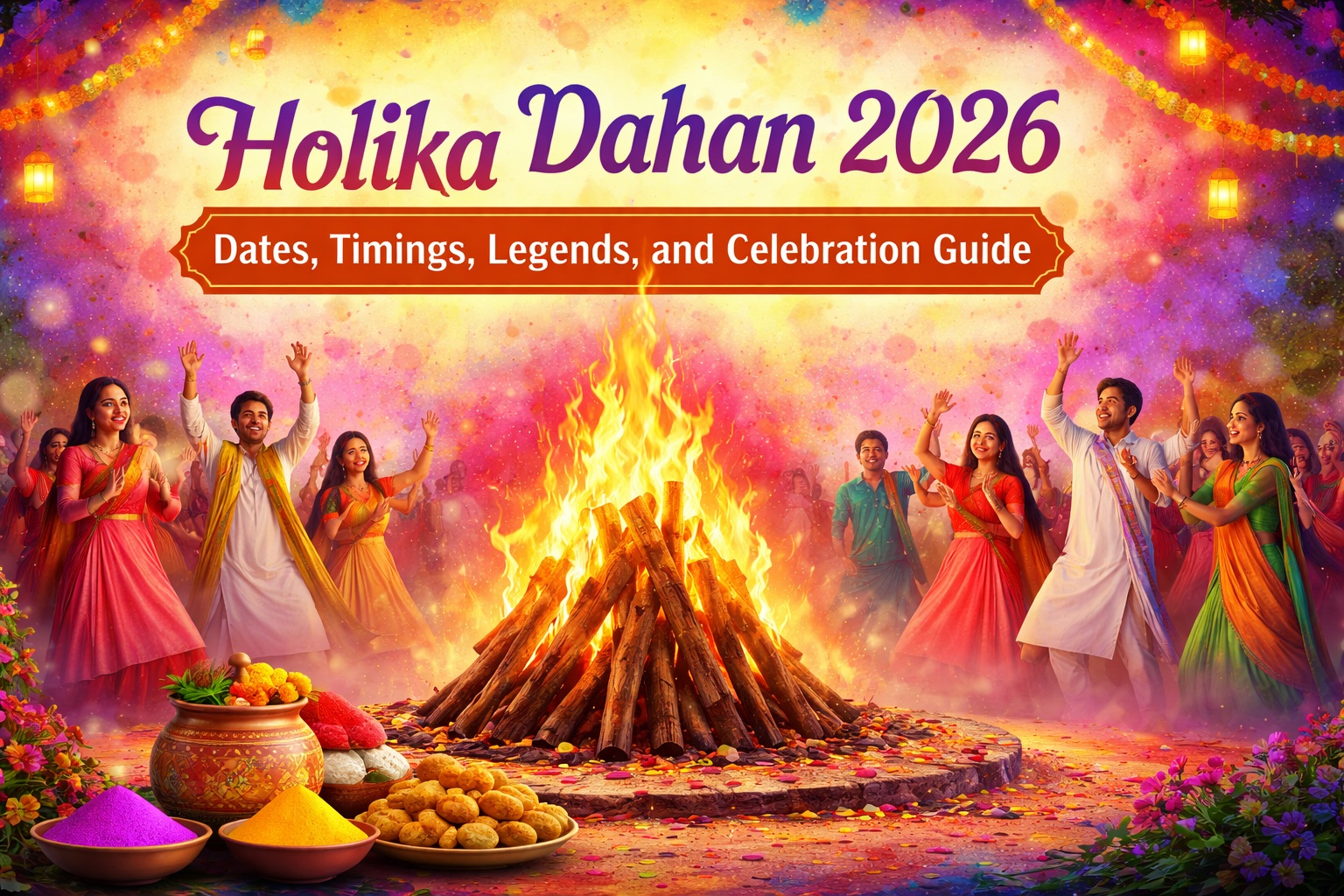



Holika Dahan marks the vibrant beginning of Holi, the festival of colors, and is celebrated with immense devotion and joy across India. This year in 2026, people gather to light the sacred bonfire, symbolizing the victory of good over evil and the triumph of positivity. From knowing the exact dates and auspicious timings to exploring local events and learning how to celebrate safely and meaningfully, this guide will help you make the most of Holika Dahan while honoring its rich traditions and cultural significance.
Holika Dahan 2026 Dates and Auspicious Timings
Holika Dahan in 2026 will be observed on **Tuesday, 3 March 2026, marking the sacred beginning of Holi festivities. This ritual is traditionally performed on Phalguna Purnima (the full moon day in the Hindu lunar calendar), symbolizing the triumph of good over evil and the burning away of negativity.
Important Dates
- Holika Dahan: 3 March 2026 (Evening)
- Rangwali Holi (Dhulandi/Colour Play): 4 March 2026 (Wednesday)
- Full Moon (Purnima) Tithi:
• Begins: 5:55 PM on 2 March 2026
• Ends: 5:07 PM on 3 March 2026
Auspicious Muhurat for Holika Dahan
Performing Holika Dahan at the right time is considered spiritually beneficial and is believed to maximize the positive effects of the ritual. In 2026, the auspicious time window is:
6:22 PM to 8:50 PM on 3 March 2026 (IST)
This period falls in Pradosh Kaal (early evening after sunset) and is traditionally deemed ideal for lighting the bonfire and performing the associated prayers and rituals.
Inauspicious (Bhadra) Timings to Avoid
According to Hindu astrology, certain times — called Bhadra Kala — are considered inauspicious for starting sacred rituals. On 3 March 2026, these are:
- Bhadra Punchha: 1:25 AM to 2:35 AM
- Bhadra Mukha: 2:35 AM to 4:30 AM
Devotees are advised to avoid performing Holika Dahan during these periods and instead choose a time outside these windows.
Holika Dahan 2026: Significance, Legends, and Rituals
Holika Dahan is not just a vibrant festival of fire; it is a deeply symbolic celebration marking the victory of good over evil. The festival is rooted in Hindu mythology and is observed on the full moon night of Phalguna, just a day before Rangwali Holi.
The Legend of Holika and Prahlad
The origin of Holika Dahan lies in the story of King Hiranyakashipu, his son Prahlad, and his sister Holika. Hiranyakashipu, proud of his power and authority, wanted everyone to worship him rather than Lord Vishnu. However, his son Prahlad remained devoted to Lord Vishnu, which greatly angered the king.
Holika, who had a boon that made her immune to fire, sat with Prahlad on a pyre, intending to burn him alive. But divine intervention saved Prahlad, and Holika perished in the flames. This legend symbolizes the triumph of devotion and righteousness over arrogance and evil, which is why devotees light bonfires on this day.
Significance of the Bonfire
The Holika Dahan fire represents the burning of negativity, ego, and bad habits. People offer grains, coconuts, and sweets to the fire as part of the ritual, seeking blessings for health, happiness, and prosperity in the coming year.
Rituals of Holika Dahan
- Cleaning and Preparing the Pyre: Families gather wood, dried twigs, and other combustible materials to build a small bonfire.
- Decorating the Fire Site: Some people place cow dung cakes or ash around the pyre and decorate the area with flowers and rangoli.
- Offering Prayers: Devotees perform a pooja near the bonfire, chanting mantras and offering coconuts, rice, and sweets to the flames.
- Circumambulating the Fire: People sometimes walk around the fire three times, symbolizing purification and protection from evil.
- Sharing Festive Foods: After the fire dies down, families enjoy traditional sweets and prepare for Rangwali Holi, where colors are played the next day.
Regional Variations
- In Vrindavan and Barsana, Holika Dahan is followed by elaborate cultural performances and fairs.
- In Maharashtra, people celebrate Choti Holi with flower petals and small bonfires in local communities.
- In South India, rituals often include community gatherings and devotional singing, along with the lighting of bonfires.
Holika Dahan 2026: Events, Celebrations, and How to Participate
Holika Dahan isn’t just a ritual—it’s the start of a joyous cultural celebration that brings families, communities, and entire towns together. From traditional bonfires and pujas to lively gatherings and festive events, people across India celebrate in unique and meaningful ways.
Community Bonfires and Puja Ceremonies
On the evening of Holika Dahan (3 March 2026), neighbourhoods and temples organise community bonfires where families gather to light the sacred pyre together. Devotees offer grains, coconuts, flowers, and sweets into the fire to symbolize the burning away of negativity and to invoke blessings for prosperity and happiness.
This communal aspect transforms Holika Dahan into a warm, social experience where friends and relatives meet, sing traditional songs, and sometimes perform parikrama (circumambulation) around the fire.
Cultural Events and Celebrations
In many cities and towns, Holika Dahan is followed by larger cultural programs such as folk music performances, dance shows, and festive fairs. In some places, municipal bodies organise special events to promote eco‑friendly celebrations, with designated locations for Holika bonfires and activities for families and children.
For example, in Ahmedabad, local authorities have set up Vedic Holi celebrations at dozens of locations, blending tradition with community involvement and sustainability.
Traditional and Regional Festivities
Across different regions, Holika Dahan and Holi celebrations take on unique flavors:
- In Braj (Mathura–Vrindavan), there’s a series of celebrations including Laddu Holi, Lathmar Holi, and Huranga, bringing together music, dance, and traditional rituals well before the official festival day.
- In Rajasthan, traditional Holika celebrations may include special rituals like creating symbolic items to burn or community feasts with local sweets and snacks. (See traditional practices)
How to Participate: Tips for a Meaningful Celebration
To make the most of Holika Dahan in 2026:
- Join a Local Celebration: Seek out community bonfires or temple events where you can participate in collective prayers and rituals.
- Respect Safety Guidelines: Follow fire‑safety precautions—keep a safe distance from the fire, supervise children, and avoid lighting bonfires near flammable structures.
- Choose Eco‑Friendly Practices: Use natural materials like cow dung cakes or dry wood instead of plastics or synthetic materials to reduce pollution and environmental impact.
- Enjoy the Festive Atmosphere: Participate in songs, dances, and local fairs; share festive foods like gujiya, mathri, and thandai with friends and family to fully embrace the spirit of the occasion.
Frequently Asked Questions (FAQs)
1. What is Holika Dahan?
Holika Dahan is a Hindu festival celebrated on the full moon night of Phalguna, a day before Holi. It involves lighting a sacred bonfire to symbolize the victory of good over evil, commemorating the legend of Prahlad and Holika.
2. When is Holika Dahan 2026?
In 2026, Holika Dahan will be observed on Tuesday, 3 March 2026, in the evening, followed by Rangwali Holi on 4 March 2026.
3. What is the auspicious time (muhurat) for Holika Dahan in 2026?
The ideal time to perform Holika Dahan is between 6:22 PM and 8:50 PM IST on 3 March 2026. This window is considered spiritually favorable for lighting the bonfire and offering prayers.
4. Why do we light a bonfire on Holika Dahan?
The bonfire represents the destruction of evil and negative energies. Devotees offer grains, sweets, and coconuts to the fire as a symbolic act of purification and renewal.
5. How can I celebrate Holika Dahan safely?
- Keep a safe distance from the fire
- Supervise children and pets
- Avoid using plastics or inflammable chemicals
- Choose open spaces for the bonfire
- Follow local fire-safety guidelines
6. Can I perform Holika Dahan at home?
Absolutely. Many families perform small-scale Holika Dahan at home. Ensure safety, use a small pyre, and follow the proper pooja rituals for blessings.
7. How is Holika Dahan celebrated in different regions of India?
- Vrindavan & Barsana: Elaborate cultural performances and fairs
- Rajasthan & Maharashtra: Community bonfires with local sweets
- South India: Devotional singing and smaller bonfires in communities
8. What should I offer to the Holika fire?
Traditional offerings include grains, coconuts, flowers, and sweets. Some people also include old papers or symbolic items representing negativity they wish to leave behind.
9. What is the connection between Holika Dahan and Holi?
Holika Dahan marks the beginning of Holi celebrations. The next day, people play with colors (Rangwali Holi), celebrating joy, friendship, and unity after the symbolic purification of the previous night.




What do you think?
It is nice to know your opinion. Leave a comment.