











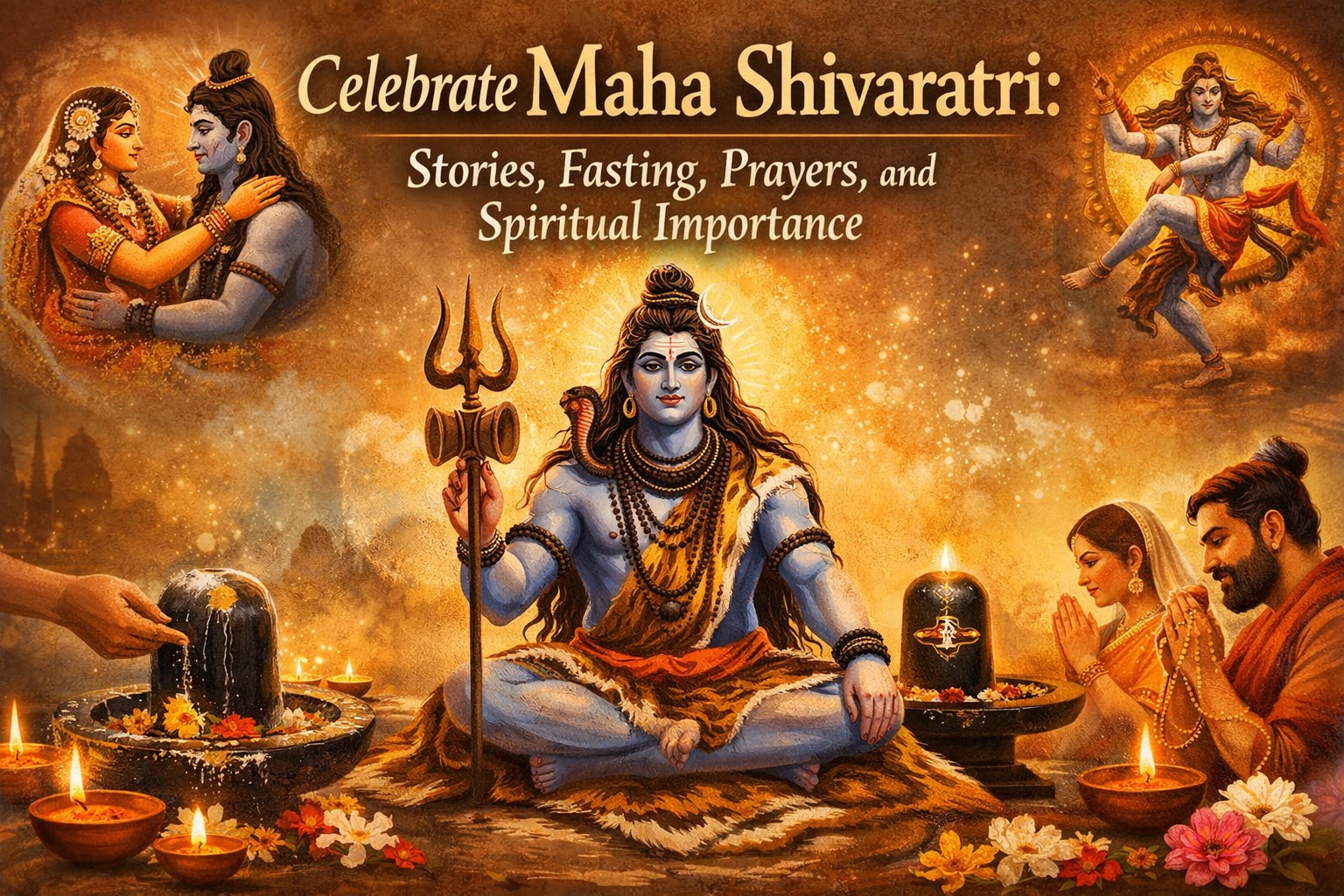



Maha Shivaratri is a very special festival dedicated to Lord Shiva, one of the most powerful gods in Hinduism. People celebrate this day with prayers, fasting, and staying awake all night, showing their love and devotion. The festival is about the victory of good over evil and finding peace in life. With its stories, rituals, and traditions, Maha Shivaratri is a time for spiritual growth and connecting with the divine.
The Legend and Meaning of Maha Shivaratri
Maha Shivaratri has many stories and legends that show its importance. One of the most popular is about the marriage of Lord Shiva and Goddess Parvati. It is believed that on this day, Lord Shiva performed a cosmic dance called Tandava, which represents the cycle of creation and destruction in the universe. The festival is also a time to overcome darkness and ignorance in our lives. By praying, fasting, and staying awake at night, devotees connect with Lord Shiva and seek his blessings for peace, strength, and wisdom.
When and How Maha Shivaratri Is Celebrated
Maha Shivaratri is celebrated on the 14th night of the dark fortnight in the month of Phalguna (usually February or March). On this day, devotees visit Shiva temples, offer prayers, and perform special rituals. Many people keep a fast, while some stay awake all night singing bhajans or chanting mantras like “Om Namah Shivaya.” The Shiva Lingam, a symbol of Lord Shiva, is bathed with milk, water, honey, and flowers. Across India, temples are beautifully decorated, and people come together to celebrate with devotion and joy.
Rituals and Fasting on Maha Shivaratri
On Maha Shivaratri, devotees follow special rituals and fasting to honor Lord Shiva. Many people fast all day, eating only fruits, milk, or a light meal. At temples and homes, the Shiva Lingam is bathed with water, milk, honey, and flowers in a ritual called Abhishekam. Devotees also offer Bilva leaves, chant “Om Namah Shivaya,” and stay awake through the night, singing bhajans or meditating. These practices help people show their devotion, purify their mind, and feel closer to Lord Shiva.
Maha Shivaratri Mantras and Prayers
Chanting mantras and offering prayers is an important part of Maha Shivaratri. The most popular mantra is “Om Namah Shivaya”, which devotees repeat to show love and devotion to Lord Shiva. People also recite other Shiva stotras and hymns during the night. Staying awake and chanting helps calm the mind, brings peace, and strengthens spiritual connection. Many devotees also meditate and reflect on their life, making this a time of both devotion and inner growth.
Modern Ways to Celebrate Maha Shivaratri
Today, people celebrate Maha Shivaratri in new and creative ways along with traditional rituals. Many join online prayers or virtual temple visits if they cannot go to a temple. Some participate in community events, spiritual webinars, or group chanting sessions. Eco-friendly celebrations are also becoming popular, like using natural flowers and avoiding plastic decorations. Even in modern life, the festival continues to bring people together to honor Lord Shiva and reflect on spiritual values.
The Complete Story of Maha Shivaratri
Maha Shivaratri has many stories, and each shows the power and importance of Lord Shiva. One of the most popular stories is about the marriage of Lord Shiva and Goddess Parvati. It is said that Parvati performed great penance to win Shiva’s love. Maha Shivaratri is celebrated to honor this divine union.
Another famous story is about the night Lord Shiva drank poison to save the world. During the churning of the ocean (Samudra Manthan), a deadly poison called Halahala appeared that could destroy everything. To protect the world, Shiva drank the poison, and it stayed in his throat, turning it blue.
Some legends also say that Shiva performed the Tandava, a cosmic dance of creation, protection, and destruction, on this night. This dance shows the cycle of life and the power of good over evil.
Because of these stories, Maha Shivaratri is seen as a night of spiritual awakening, devotion, and reflection. Devotees fast, pray, chant mantras, and stay awake all night to honor Lord Shiva and seek his blessings for strength, wisdom, and peace.
Significance and Spiritual Importance of Maha Shivaratri
Maha Shivaratri is not just a festival; it has deep spiritual meaning. It reminds us to overcome darkness and ignorance in our lives and seek wisdom, peace, and self-control. Fasting, praying, and staying awake all night help devotees focus their mind and connect with Lord Shiva. The festival also teaches the importance of devotion, patience, and discipline. By celebrating Maha Shivaratri, people feel closer to the divine and find inner strength and calmness that stays with them throughout the year.
Final Word
Maha Shivaratri is a beautiful festival that brings people together to honor Lord Shiva and reflect on life, devotion, and spirituality. Whether through fasting, prayers, chanting, or staying awake all night, the festival reminds us to seek peace, wisdom, and positivity in our lives. It is a time to connect with the divine, celebrate traditions, and strengthen our inner self. By understanding its stories, rituals, and significance, Maha Shivaratri becomes more than just a festival—it becomes a journey of faith, love, and spiritual growth.
FAQs About Maha Shivaratri
1. What is Maha Shivaratri?
Maha Shivaratri is a Hindu festival dedicated to Lord Shiva. It is celebrated with prayers, fasting, and night-long vigils to honor the god and seek his blessings.
2. Why do devotees fast on Maha Shivaratri?
Fasting is a way to show devotion, purify the body and mind, and focus on spiritual growth. Some people eat only fruits, milk, or light meals, while others fast completely.
3. When is Maha Shivaratri celebrated?
It falls on the 14th night of the dark fortnight in the month of Phalguna (usually February or March) according to the Hindu lunar calendar.
4. What are the main rituals of Maha Shivaratri?
Devotees perform Abhishekam (bathing the Shiva Lingam with milk, water, and honey), offer Bilva leaves, chant mantras like “Om Namah Shivaya,” and stay awake all night in prayer and meditation.
5. What is the spiritual importance of Maha Shivaratri?
The festival teaches devotion, self-control, and reflection. It symbolizes the triumph of good over evil and helps devotees connect with Lord Shiva for inner peace and wisdom.
6. Can Maha Shivaratri be celebrated in modern ways?
Yes, many people now celebrate through online prayers, virtual temple visits, eco-friendly decorations, and community events, while still following traditional rituals at home.




What do you think?
It is nice to know your opinion. Leave a comment.