











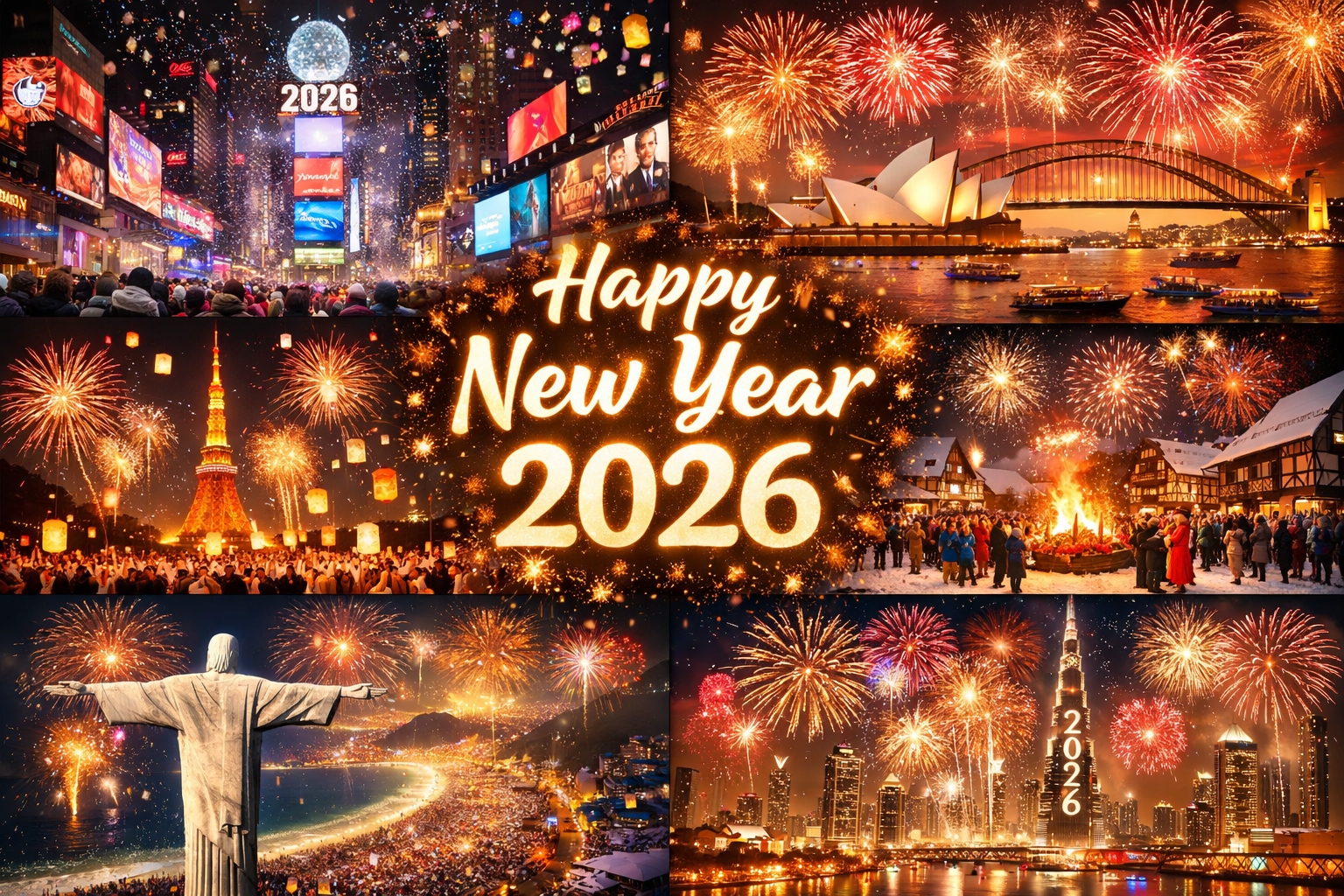



New Year’s Day marks a fresh beginning, a symbolic reset, and a global moment of hope. As the world welcomes New Year’s Day 2026, millions of people across different cultures, religions, and time zones celebrate the arrival of New Year 2026 in unique and meaningful ways. From grand fireworks and lively street festivals to quiet family rituals and spiritual observances, New Year’s Day unites humanity through shared optimism for the future.
This detailed guide explores the history, meaning, global traditions, and modern celebrations of New Year’s Day 2026, highlighting how different countries ring in the new year and what makes each celebration special.
What Is New Year’s Day?
New Year’s Day is celebrated on January 1st and marks the first day of the Gregorian calendar year. It follows New Year Eve (December 31st), which is often associated with countdowns, fireworks, and parties.
The celebration of New Year’s Day symbolizes:
- New beginnings
- Fresh goals and resolutions
- Hope, renewal, and positivity
- Reflection on the past year
In New Year’s Day 2026, these themes resonate strongly as people step into a new chapter shaped by changing global trends, technology, and cultural evolution.
When Is New Year’s Day 2026?
New Year’s Day 2026 falls on Thursday, January 1, 2026. It is a public holiday in many countries, giving people the opportunity to relax, celebrate, travel, and spend time with family and friends.
History and Origins of New Year’s Day
The concept of New Year’s Day dates back thousands of years.
Ancient Beginnings
- The earliest New Year celebrations can be traced to ancient Mesopotamia (around 2000 BCE).
- Early civilizations marked the new year based on agricultural cycles and lunar movements.
Roman Influence
- In 46 BCE, Julius Caesar introduced the Julian calendar, officially declaring January 1 as New Year’s Day.
- January was named after Janus, the Roman god of beginnings, endings, and transitions.
Gregorian Calendar
- In 1582, Pope Gregory XIII introduced the Gregorian calendar, which is still used today.
- January 1 became globally recognized as New Year’s Day over time.
By New Year 2026, this ancient celebration has evolved into a worldwide cultural phenomenon.
The Global Significance of New Year’s Day
New Year’s Day is more than just a calendar change—it represents hope, transformation, and unity.
Why New Year’s Day Matters:
- Encourages reflection on personal and collective growth
- Inspires goal-setting and resolutions
- Strengthens family and community bonds
- Marks a psychological fresh start
As New Year’s Day 2026 arrives, many people view it as an opportunity to reset priorities and embrace positive change.
New Year’s Day Traditions Around the World
United States
In the U.S., New Year’s Day is often relaxed compared to New Year’s Eve.
Traditions include:
- Watching parades like the Rose Parade in Pasadena
- College football bowl games
- Family brunches and get-togethers
- Making New Year resolutions
Many Americans welcome New Year 2026 with a focus on health, career goals, and personal improvement.
United Kingdom
In the UK, New Year’s Day celebrations vary by region.
Key traditions:
- “First-footing” in Scotland, where the first visitor brings luck
- Family meals and social gatherings
- Charity swims in cold water
Scotland’s Hogmanay celebrations often extend into New Year’s Day 2026, making it one of the most vibrant observances.
India
Although India celebrates multiple New Years based on regional calendars, New Year’s Day (January 1) is widely recognized, especially in urban areas.
Common practices:
- Visiting temples and churches
- Family feasts and outings
- Parties and cultural events
For many Indians, New Year 2026 represents hope, spiritual growth, and prosperity.
Japan
Japan’s New Year’s Day (Shōgatsu) is one of the most important holidays.
Traditions include:
- Visiting shrines and temples (Hatsumode)
- Eating symbolic foods like soba noodles
- Sending New Year greeting cards
Japanese families welcome New Year’s Day 2026 with peace, gratitude, and reflection.
China
Although the Chinese New Year is based on the lunar calendar, January 1 is still observed as a public holiday.
Activities include:
- Family gatherings
- Cultural performances
- Public celebrations
The arrival of New Year 2026 is seen as a modern complement to traditional Lunar New Year festivities.
Australia
In Australia, New Year’s Day often means outdoor fun.
Popular activities:
- Beach outings and barbecues
- Music festivals
- Relaxed family celebrations
With summer in full swing, New Year’s Day 2026 will be celebrated under sunny skies.
Brazil
Brazilian celebrations blend spirituality with festivity.
New Year’s Day customs:
- Wearing white for peace
- Offering flowers to the sea
- Beach gatherings
The spirit of New Year 2026 in Brazil focuses on harmony, luck, and new beginnings.
South Africa
In South Africa, New Year’s Day is colorful and energetic.
Traditions include:
- Street parades
- Music and dance performances
- Cultural celebrations
The day represents unity and joy as people welcome New Year’s Day 2026.
Food Traditions on New Year’s Day
Food plays a major role in New Year’s Day celebrations worldwide.
Popular Symbolic Foods:
- Grapes (Spain): Luck and prosperity
- Black-eyed peas (USA): Good fortune
- Soba noodles (Japan): Longevity
- Lentils (Italy): Wealth
- Rice dishes (Asia): Abundance
These traditions continue to thrive as families celebrate New Year’s Day 2026.
New Year’s Day and Resolutions
Making resolutions is a timeless New Year tradition.
Common New Year Resolutions:
- Improving health and fitness
- Career growth
- Financial planning
- Learning new skills
- Strengthening relationships
As New Year 2026 begins, people worldwide commit to positive lifestyle changes.
Religious and Spiritual Observances
For many, New Year’s Day has spiritual importance.
- Christians attend church services
- Hindus visit temples
- Buddhists practice meditation
- Many cultures pray for peace and prosperity
New Year’s Day 2026 offers a moment for inner reflection and gratitude.
Modern Celebrations in the Digital Age
Technology has reshaped how we celebrate New Year’s Day.
Modern Trends:
- Virtual parties and livestreams
- Social media greetings
- Online resolutions and goal trackers
- Digital greeting cards
In New Year 2026, global connectivity allows people to celebrate together regardless of distance.
Why New Year’s Day 2026 Is Special?
Every New Year brings fresh hope, but New Year’s Day 2026 stands out as a symbol of progress, resilience, and innovation.
People are:
- Embracing healthier lifestyles
- Adapting to digital advancements
- Focusing on sustainability
- Prioritizing mental well-being
The celebration of New Year 2026 reflects evolving global values.
How Families Celebrate New Year’s Day?
Family remains central to New Year’s Day traditions.
Typical family activities:
- Sharing meals
- Watching movies or sports
- Playing games
- Reflecting on the past year
These moments strengthen bonds as families welcome New Year’s Day 2026 together.
New Year’s Day Greetings and Wishes
Exchanging greetings is an essential part of New Year’s Day.
Popular messages include:
- “Happy New Year!”
- “Wishing you success and happiness in New Year 2026”
- “May New Year’s Day bring peace and prosperity”
Digital platforms make it easy to share wishes globally.
New Year’s Day as a Public Holiday
Many countries observe New Year’s Day as a public holiday.
Benefits of the holiday:
- Rest and recovery
- Travel opportunities
- Community celebrations
- Quality family time
New Year’s Day 2026 will give millions a chance to pause and recharge.
Final Thoughts
New Year’s Day 2026 is more than just the first date on the calendar—it’s a universal celebration of hope, renewal, and togetherness. From ancient traditions to modern digital celebrations, New Year’s Day reflects humanity’s shared desire for progress and happiness.
As the world welcomes New Year 2026, people across cultures will celebrate in their own ways—through food, faith, family, and festivity—united by the promise of a brighter future.
May New Year’s Day 2026 bring peace, success, and joy to everyone around the globe.
FAQs
When is New Year’s Day 2026 celebrated?
New Year’s Day 2026 is celebrated on Thursday, January 1, 2026. It marks the first day of the Gregorian calendar and is observed as a public holiday in many countries around the world.
Why is New Year’s Day celebrated?
New Year’s Day is celebrated to mark a fresh beginning and the start of a new calendar year. It symbolizes renewal, hope, goal-setting, and leaving behind the challenges of the past year.
What is the significance of New Year’s Day?
The significance of New Year’s Day lies in its universal message of new beginnings. People reflect on the past year, make resolutions, and welcome positive change, making New Year’s Day 2026 a meaningful global celebration.
How is New Year’s Day celebrated around the world?
New Year’s Day is celebrated differently across cultures. Some countries enjoy family gatherings and special meals, while others participate in parades, religious services, outdoor festivals, or cultural rituals to welcome New Year 2026.
Is New Year’s Day 2026 a public holiday?
Yes, New Year’s Day 2026 is a public holiday in many countries, including the USA, UK, India, Australia, Canada, and several European and Asian nations.
What are popular food traditions on New Year’s Day?
Many cultures associate special foods with good luck on New Year’s Day, such as grapes in Spain, black-eyed peas in the United States, soba noodles in Japan, and lentils in Italy, symbolizing prosperity in New Year 2026.
What are New Year resolutions and why are they important?
New Year resolutions are personal goals people set on New Year’s Day to improve their lives. They often focus on health, career, finances, or relationships and represent a fresh start for New Year 2026.
How is New Year’s Day different from New Year’s Eve?
New Year’s Eve is about countdowns and celebrations, while New Year’s Day is more reflective. It focuses on rest, family time, spiritual activities, and planning for the year ahead, especially on New Year’s Day 2026.
Related Blog: Happy New Year 2026: Messages, Quotes & Wishes




What do you think?
It is nice to know your opinion. Leave a comment.