











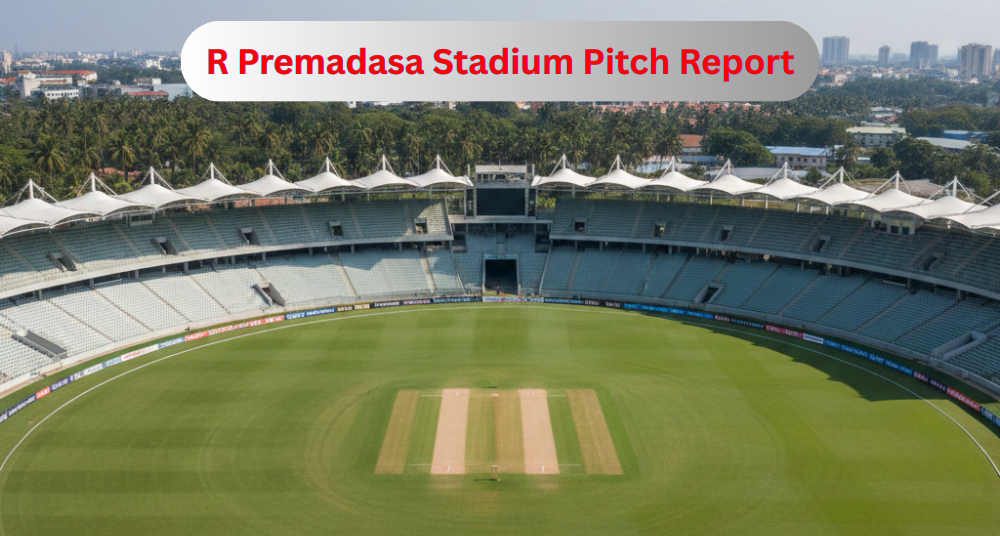



Step onto the R Premadasa Stadium pitch in Colombo, where every bounce and turn can change the course of a match. This 2026 pitch report provides an in-depth analysis of batting and bowling trends, toss strategies, average scores, and historic records — everything you need to know before the next game.
Overview of R Premadasa Stadium and Its Pitch
The R Premadasa Stadium, located in Colombo, Sri Lanka, is one of the country’s most iconic cricket venues, with a seating capacity of over 35,000 spectators. Known for hosting high-stakes international matches across formats—T20s, ODIs, and Tests—the stadium has witnessed some of the most memorable moments in cricket history.
The pitch at R Premadasa is dynamic and balanced, offering something for both batsmen and bowlers. In the early stages of a match, pacers can exploit seam movement and bounce, especially under humid conditions. As the game progresses, the surface tends to slow down, giving spinners a significant advantage, particularly in the middle overs of limited-overs matches or the later days of a Test.
Other factors like dew, weather conditions, and outfield speed play a crucial role in shaping match outcomes. For instance, in night T20 games, dew often makes the ball slippery, favoring the chasing team. Historically, first-innings scores range from 140–150 in T20s, 230–235 in ODIs, and can go much higher in Tests, reflecting how the pitch evolves over time.
Understanding the nuances of the R Premadasa pitch is essential for captains, players, and fantasy cricket enthusiasts, as it directly impacts strategies, team selection, and match results.
R Premadasa Stadium Pitch Report
The R Premadasa Stadium pitch in Colombo is one of Sri Lanka’s most talked-about surfaces, known for its balanced but evolving behavior across formats. Whether it’s a fast-paced T20, a strategic ODI, or a long-format Test, the pitch has unique characteristics that influence match outcomes.
Key Features of the Pitch:
- Early Advantage for Pacers: In the first few overs, seamers can exploit bounce and movement due to the slightly moist surface, especially during morning sessions in Tests or early T20 powerplays.
- Spinner-Friendly Middle Overs: As the game progresses, the pitch slows down and starts to assist spinners. In ODIs and T20s, middle overs are often dominated by spin, making run-scoring more challenging.
- Impact of Dew: Night matches bring dew on the outfield, making the ball slippery for bowlers. This factor often favors teams chasing, particularly in T20s and ODIs.
- Score Patterns: Average first-innings scores vary by format:
- T20: 140–150 runs
- ODI: 230–235 runs
- Test: Scores can be massive, with several historic totals exceeding 600 runs in an innings
- T20: 140–150 runs
R Premadasa Stadium Pitch Report: Batting or Bowling?
One of the most common questions cricket fans and analysts ask about the R Premadasa Stadium pitch is whether it favors batsmen or bowlers. The answer depends heavily on match format, weather conditions, and the phase of the game.
Early Advantage – Bowling
- In the first few overs, pacers can extract bounce and seam movement, especially during morning sessions in Test matches or early T20 powerplays.
- Fast bowlers often get early breakthroughs when the ball is new, making bowling first a tactical advantage in some games.
Middle and Later Overs – Batting Challenges
- As the pitch slows down, spinners dominate the middle overs, especially in ODIs and T20s.
- Teams batting second sometimes struggle if dew is absent, making batting under pressure more difficult in later innings.
Dew Factor – Chasing Becomes Easier
- Night games often bring dew, which favors the team chasing because bowlers struggle to grip the ball.
- In such conditions, batting becomes easier in the second innings, slightly tipping the balance toward batsmen.
Overall Assessment
- Balanced Pitch: Early advantage for bowlers, later advantage for spinners, and potential batting edge due to dew.
- In T20s and ODIs, teams often prefer chasing, while in Tests, the pitch can produce high totals with both batting and bowling challenges over multiple days.
Read More: Shaheed Veer Narayan Singh International Cricket Stadium Pitch Report
Key Records and Stats at R Premadasa Stadium
The R Premadasa Stadium in Colombo is not only famous for its lively pitch but also for the historic records and milestones achieved here. Whether it’s T20, ODI, or Test cricket, understanding these stats gives fans and analysts a better idea of how the pitch plays and what to expect during matches.
Overall Match Records
Test Matches Played: ~9 matches on record (Tests) at the venue.
ODIs Played: ~160+ matches in ODI cricket.
T20Is Played: ~58–60 T20 internationals.
T20 International Records
- Highest Team Total: 215/5 by Bangladesh vs Sri Lanka (2018).
- Lowest Team Total: 80 all‑out by Afghanistan vs England (2012).
- Highest Score Chased: 215/5 — same match above.
- Best Bowling Figures: 4/9 by Wanindu Hasaranga (SL) vs India (2021).
- Most T20I Runs at Venue: 442 by Kusal Perera (SL).
- Most T20I Wickets at Venue: 24 by Wanindu Hasaranga.
The average first‑innings score in T20Is here is roughly 142, with the second innings closer to 128.
One Day International (ODI) Records
- Highest ODI Total: 375/5 by India vs Sri Lanka (2017).
- Lowest ODI Total: 50 all‑out by Sri Lanka vs India (2023).
- Highest Individual Score (ODI): 169 by Kumar Sangakkara.
- Best ODI Bowling Figures: 7/19 by Wanindu Hasaranga.
- Most ODI Wickets at Venue: 75 by Muttiah Muralitharan.
- Most ODI Runs at Venue: Sanath Jayasuriya scored 2,514 runs here, one of the highest tallies by any batter at a single ground.
In ODIs, average first‑innings totals are competitive around 230–237, with averages for the second innings around 188–195.
Test Match Records
- Highest Team Total: 952/6 dec by Sri Lanka vs India — one of the highest team totals in Test history.
- Highest Individual Test Score at Venue: Sanath Jayasuriya’s 340.
- Historic bowling highlights also include Rangana Herath’s 7/89 in an innings at this ground.
Toss and Match Strategies at R Premadasa Stadium
The R Premadasa Stadium pitch in Colombo is famous not just for its playing surface, but also for how toss decisions and match strategies can heavily influence the outcome of games across formats. Understanding the nuances of the pitch, local weather, and dew conditions can give teams a crucial advantage.
Toss Strategies
- T20 Matches: Due to dew in night games, captains often prefer fielding first. Chasing becomes easier as the ball becomes slippery, making it harder for bowlers to grip.
- ODIs: Toss decisions vary depending on the weather. While batting first can help set a competitive total, dew in evening games can favor teams chasing.
- Tests: Batting first is generally preferred. Early pacer-friendly conditions can help seamers, but the pitch tends to slow down by day 3, favoring spinners.
Batting Strategies
- T20s & ODIs: Teams batting second can exploit dew to maintain scoring momentum. Middle overs require careful handling as spinners dominate this phase.
- Tests: Long-format batting requires patience. Early sessions favor pacers, while spinners can turn matches in the middle and later days. Building partnerships is key.
Bowling Strategies
- Early Overs: Seamers should attack early, especially with a new ball, to take early wickets.
- Middle Overs (Limited-Overs): Spinners dominate; variations like googlies, carrom balls, and off-spin can control the run rate.
- Late Innings: Dew can reduce the effectiveness of spinners in T20s/ODIs; captains must adjust field placements and bowling plans accordingly.
Dew and Weather Considerations
- Night matches often bring dew, giving an edge to teams chasing.
- Captains should assess the toss, humidity, and pitch moisture before deciding to bat or bowl first.
Final Words
The R Premadasa Stadium in Colombo is more than just a cricket ground—it’s a venue where strategy, skill, and pitch knowledge come together to decide the outcome of matches. From fast-paced T20 thrillers to high-scoring ODIs and historic Test battles, understanding the pitch, dew, and weather conditions is key for both teams and fans.
Whether you’re a captain planning toss decisions, a player adjusting your batting or bowling approach, or a fantasy cricket enthusiast analyzing stats, the R Premadasa Stadium pitch report provides crucial insights. With a balanced surface that evolves over time, this stadium consistently delivers exciting, unpredictable cricket, making every match here a must-watch.




What do you think?
It is nice to know your opinion. Leave a comment.