











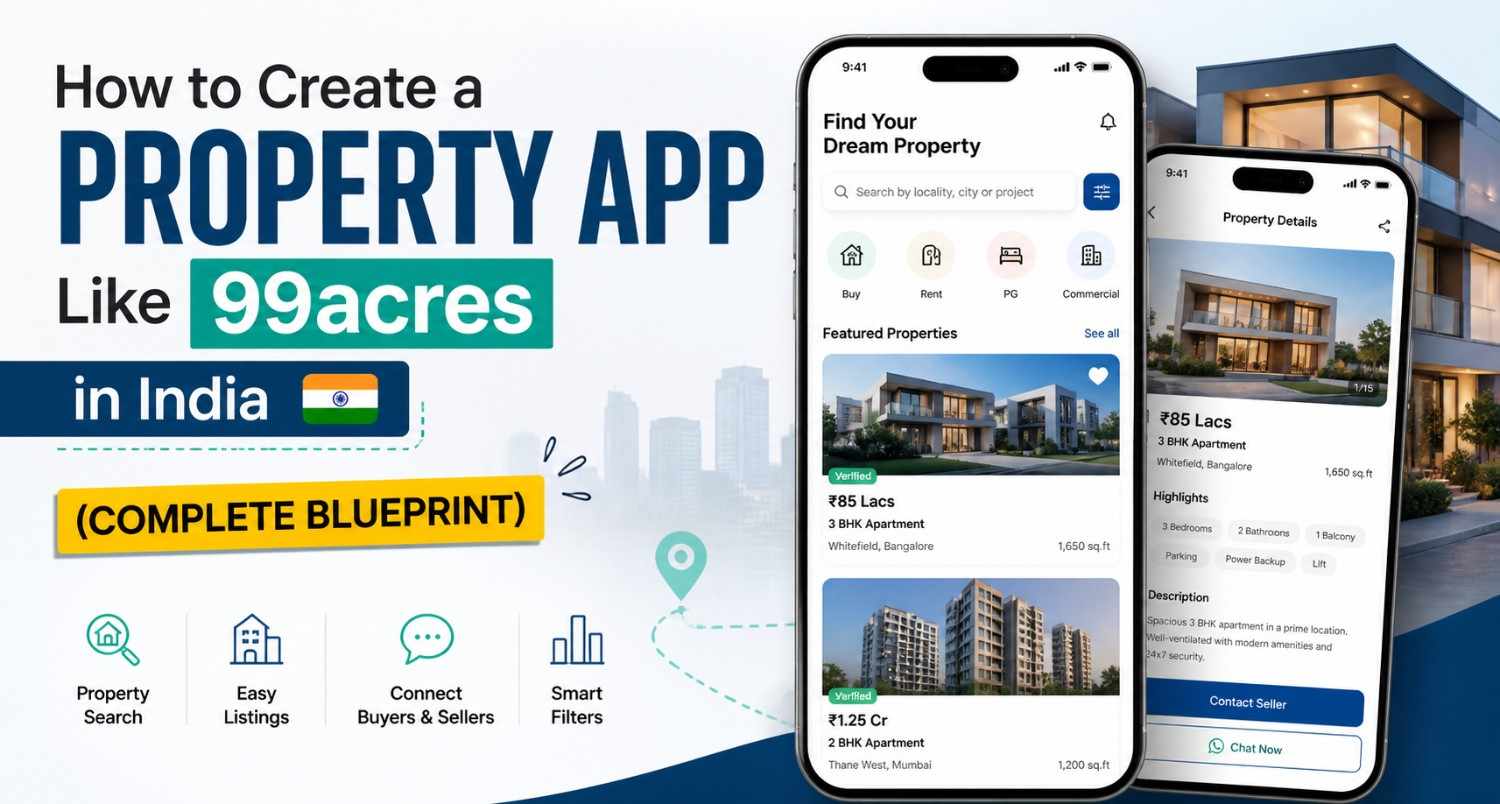



The real estate industry has rapidly shifted toward digital platforms, where buyers, sellers, and agents connect seamlessly. Apps like 99acres have transformed how people search, list, and finalize property deals. If you’re planning to build a similar property marketplace, you need a clear strategy that combines technology, user experience, and monetization.
This guide walks you through everything—from planning to launch—so you can build a scalable, high-performing property app.
1. Understanding the Business Model
Before jumping into development, you need to define how your app will function.
A property app like 99acres operates as a two-sided marketplace, connecting:
- Buyers/Tenants searching for properties
- Sellers/Agents listing properties
Core Revenue Streams:
- Paid property listings (featured ads)
- Subscription plans for agents/builders
- Lead generation fees
- Display advertising
- Premium placement or boosts
The key is balancing value for both sides—more listings attract buyers, and more buyers attract sellers.
2. Market Research & Target Audience
Not all property apps succeed because many skip deep research.
Identify Your Niche:
- Residential (apartments, villas)
- Commercial (offices, retail)
- Rentals vs Buying
- Budget vs luxury segment
- City-specific or pan-India
Define Your Audience:
- First-time home buyers (age 25–35)
- Investors
- Real estate agents
- Builders/developers
Competitor Analysis:
Study platforms like:
- MagicBricks
- Housing.com
- NoBroker
Analyze their:
- Features
- UI/UX
- Monetization strategy
- Weak points (this is your opportunity)
3. Must-Have Features for Buyers & Sellers
A successful property app must deliver value to both sides.
Buyer Features:
- Advanced property search (location, price, BHK, amenities)
- Map-based property browsing
- Filters (budget, size, property type)
- Property details with images/videos
- Saved listings & wishlist
- Contact owner/agent
- Reviews & ratings
- Loan/EMI calculator
Seller/Agent Features:
- Easy property listing form
- Upload images/videos
- Dashboard to manage listings
- Lead tracking system
- Analytics (views, clicks, inquiries)
- Subscription & payment system
Admin Panel:
- User management
- Listing moderation
- Payment tracking
- Content management
- Analytics dashboard
4. UI/UX Design Strategy
In real estate apps, trust + simplicity = conversions.
Design Principles:
- Clean and minimal interface
- High-quality property images
- Easy navigation (3–4 clicks max to reach property)
- Mobile-first design
Important UX Elements:
- Smart search bar (auto-suggestions)
- Location-based results (GPS integration)
- Fast loading speed
- Clear CTAs (Call, WhatsApp, Book Visit)
A bad UX can kill conversions even if you have great listings.
5. Choosing the Right Tech Stack
Your tech stack determines scalability and performance.
Frontend:
- React Native / Flutter (cross-platform apps)
- Swift (iOS), Kotlin (Android)
Backend:
- Node.js / Django / Laravel
Database:
- MongoDB (flexible data)
- PostgreSQL (structured data)
Integrations:
- Google Maps API (location)
- Payment gateways (Razorpay, Stripe)
- Cloud storage (AWS S3)
Advanced Tech:
- AI-based property recommendations
- Chatbots for instant queries
- Image recognition for property tagging
6. Development Process (Step-by-Step)
Step 1: Define MVP (Minimum Viable Product)
Focus only on essential features:
- User registration
- Property listing
- Search & filters
- Contact option
Step 2: Wireframing & Prototyping
Create app flow before coding.
Step 3: Development
- Backend setup
- API integration
- Frontend development
Step 4: Testing
- Bug fixing
- Performance testing
- Security checks
Step 5: Launch
- Soft launch in one city
- Collect feedback
- Improve before scaling
7. Cost to Build a Property App
The cost depends on complexity and features.
Estimated Cost (India):
- Basic App (MVP): ₹5–10 Lakhs
- Mid-Level App: ₹10–25 Lakhs
- Advanced Platform: ₹25–50+ Lakhs
Cost Factors:
- Features complexity
- Design quality
- Tech stack
- Development team
Start with MVP to reduce risk and validate your idea.
8. Monetization Strategy
A property app is profitable if monetization is planned early.
Best Revenue Models:
- Freemium Listings
- Free basic listing
- Paid featured listing
- Subscription Plans
- Monthly plans for agents
- Lead Generation Fees
- Charge per verified lead
- Ads & Promotions
- Builders pay for visibility
- Affiliate Revenue
- Home loans, insurance, legal services
9. Marketing & User Acquisition
Building the app is only half the job—marketing drives growth.
Organic Strategies:
- SEO blogs (property tips, city guides)
- Local landing pages
- YouTube walkthroughs
Paid Strategies:
- Google Ads (search intent)
- Facebook & Instagram ads
- Retargeting campaigns
Growth Hacks:
- Referral programs
- Influencer marketing
- Local broker partnerships
10. Challenges & Solutions
Problem: Fake Listings
Solution: Manual verification + AI moderation
Problem: Low Initial Users
Solution: Focus on one city and dominate locally
Problem: Trust Issues
Solution: Verified badges + reviews + real images
Problem: High Competition
Solution: Niche targeting (luxury, rentals, student housing)
11. Future Trends in Property Apps
To stay competitive, consider these trends:
- AI-powered recommendations
- Virtual property tours (VR/AR)
- Blockchain for secure transactions
- Voice search integration
- Hyperlocal targeting
Conclusion
Building a property app like 99acres is not just about development—it’s about creating a trust-driven marketplace that connects buyers and sellers efficiently.
Start with a clear niche, build a strong MVP, focus on user experience, and scale with smart marketing strategies. With the right execution, your app can become a powerful platform in the growing digital real estate ecosystem.




What do you think?
It is nice to know your opinion. Leave a comment.